
Introduction
Effective airway clearance is a cornerstone of respiratory care in critically ill patients. The cough reflex plays a key role in maintaining airway patency by mobilizing and removing airway secretions. However, cough effectiveness is frequently impaired in the intensive care unit (ICU) owing to factors such as the presence of an artificial airway, sedation, respiratory muscle weakness, and impaired mucociliary transport. Consequently, retention of airway secretions is common, potentially contributing to atelectasis, impaired gas exchange, and prolonged mechanical ventilation.1–3
Several strategies are employed to manage retained secretions in mechanically ventilated patients. Endotracheal suctioning is the most frequent method for removing secretions from the artificial airway and proximal tracheobronchial tree.4 Chest physiotherapy techniques, including positioning and manual airway clearance maneuvers, are also widely utilized; however, their efficacy may vary depending on clinician expertise and patient characteristics.5,6
Mechanical insufflation-exsufflation (MI-E) is a cough augmentation technique in which a mechanical device delivers preset positive-pressure insufflation followed by a rapid shift to preset negative-pressure exsufflation, allowing standardized airway clearance with less dependence on clinician expertise than manual techniques. This process generates high expiratory flows that simulate a natural cough, thereby promoting the mobilization of secretions.7 While MI-E is well-established for patients with neuromuscular disorders,8 its application in the ICU for invasive mechanical ventilation has only recently gained attention. Recent clinical studies have reported that MI-E may improve secretion clearance, respiratory mechanics, and extubation success.9–11
Previous reviews have summarized the use of MI-E in critically ill patients. A scoping review by Swingwood et al. described indications, settings, and barriers to implementation but did not quantitatively synthesize outcomes.12 In addition, a Cochrane review evaluated multiple cough augmentation techniques rather than MI-E specifically and included both adult and pediatric populations.13 Therefore, the clinical effects of MI-E in mechanically ventilated adult ICU patients remain uncertain. This systematic review and meta-analysis aimed to evaluate the clinical efficacy of MI-E compared with usual care in critically ill patients with mechanical ventilation.
Methods
This systematic review and meta-analysis was registered at PROSPERO (registration number: CRD 42025636812). The Preferred Reporting Items for Systematic Reviews and Meta-Analysis (PRISMA) 2020 Statement was used as a guide for this meta-analysis.14
Inclusion and Exclusion Criteria
We included individual RCTs. Crossover RCTs were eligible for inclusion. We excluded unpublished studies and studies available only as abstracts. We included participants aged ≥18 years who received mechanical ventilation in the ICU. If studies focusing solely on neuromuscular disorders had been identified, we planned to conduct a subgroup analysis; however, none were found. The prespecified primary outcome was mechanical ventilation duration. Furthermore, we collected the following data as secondary outcomes: the amount of aspirated airway secretions, respiratory system compliance, airway resistance, length of ICU stay, and mortality. All reported results corresponding to these outcome domains were considered. When multiple post-intervention measurements were reported for the same physiological outcome, we selected the earliest post-intervention measurement available to capture the immediate physiological effect of MI-E and to improve temporal comparability across studies. Detailed measurement time points and the data selected for each study are provided in Supplementary Table S2.
Search Methods for Identifying Studies
We searched Embase, MEDLINE via PubMed, CINAHL, and the Cochrane Library from database inception to April 2025. Prior to manuscript resubmission, the search was updated on April 30, 2026 using the same search strategy and eligibility criteria. No additional eligible studies were identified, and therefore the final set of included studies remained unchanged. The search strategy comprised a combination of free text words, words used in titles and/or abstracts and medical subject headings. The search strategy was limited to the inclusion of peer-reviewed publications that involved only human participants. To ensure that the search strategy covered all topic-related studies, we included different terms and spellings used worldwide. Furthermore, language restrictions were not applied. Detailed search strategies for all databases are provided in Supplementary Appendix 1.
Study Selection
After duplicate records were removed, titles and abstracts were independently screened by pairs of reviewers (YT, TI, SI, HI, YK, TO, SN, and SM) to identify potentially eligible studies. The full texts of potentially relevant articles were then independently assessed by the same reviewer pairs according to the predefined eligibility criteria. Disagreements were resolved through discussion, and when consensus could not be reached, a third reviewer (SY) made the final decision. No automation tools were used during the study selection process.
Data Extraction
A data extraction form was used to extract study information and outcome data. Eight reviewers (YT, TI, SI, HI, YK, TO, SN, and SM) were divided into four teams, with data extraction performed independently in pairs. Disagreements within each team were resolved through discussion or, when necessary, by involving a third reviewer (SY). The accuracy of data entry was double-checked by verifying the data presented in the systematic review against those presented in the research reports. Another author (SY) randomly checked the extracted data and patient characteristics against their source to ensure accuracy. When data were insufficient, we contacted the study authors and requested additional data. If the required data were not available, we estimated values from other reported summary statistics or extracted data from published figures using WebPlotDigitizer version 4.1.15 When a study reported the median or interquartile range instead of the mean and standard deviation, we estimated the mean and standard deviation using the predictive formula described in the previous study.16 Wherever possible, data were collected on an intention-to-treat basis.
Assessment of Risk of Bias in the Included Studies
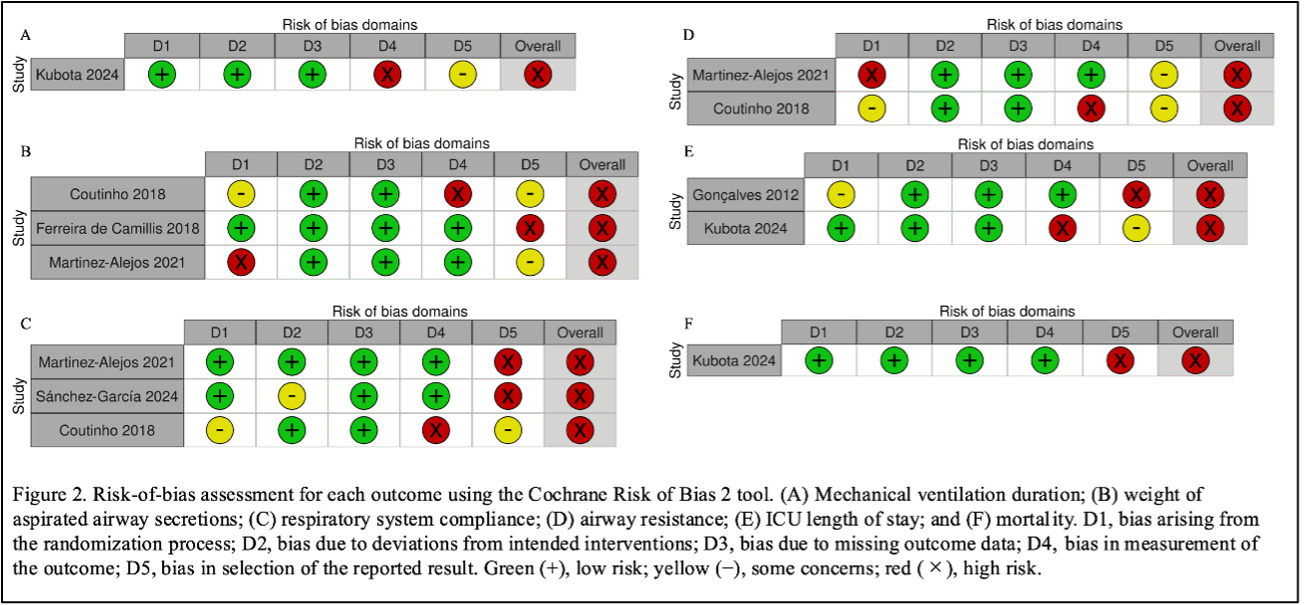
The risk of bias of each study was independently assessed by YT, TI, SI, HI, YK, TO, SN, and SM using the Risk of Bias Tool 2 according to the Cochrane Handbook for Systematic Reviews of Interventions.17 The risk of bias was assessed based on the following criteria: bias arising from the randomization process, bias due to deviations from intended interventions, bias due to missing outcome data, bias in measuring the outcome and bias in selecting the reported result. In cases of differing assessments, the third author (SY) was consulted for a final decision on the assessment.
Assessment of Evidence Certainty
The certainty of the body of evidence for the prespecified outcomes was assessed using the Grading of Recommendations Assessment, Development and Evaluation (GRADE) approach. The certainty of evidence was evaluated considering risk of bias, inconsistency, indirectness, imprecision, and publication bias. We applied the methods and recommendations described in the Cochrane Handbook for Systematic Reviews of Interventions.17 GRADEpro GDT, a web-based tool, was used to support the GRADE assessment and generate the Summary of Findings Table (Table 1).
Data Synthesis and Analysis
The patients were divided into two groups: participants in MI-E group and usual care group. Data syntheses and analyses were performed using R software (version 4.4.1; R Foundation for Statistical Computing, Vienna, Austria). Meta-analysis was performed when at least two studies provided clinically and methodologically comparable data for a given outcome. The appropriateness of pooling was assessed considering the timing and intensity of the MI-E intervention, outcome definition and measurement, and the temporal relationship between the intervention and outcome assessment. For clinical outcomes, studies were included in quantitative synthesis only when the timing and duration of the MI-E intervention allowed a plausible effect on the outcome. When only one eligible study remained for an outcome, no meta-analysis was performed; the study-specific effect estimate and 95% confidence interval (CI) were calculated and presented where possible. Dichotomous outcomes were expressed as risk ratios (RRs) with 95% CIs. Continuous outcomes measured using the same scale were expressed as mean differences (MDs) with 95% CIs. Statistical heterogeneity among studies included in meta-analysis was assessed qualitatively using forest plots and quantitatively using the chi-square test for heterogeneity and the I2 statistic. Data were pooled using a random-effects model where appropriate. To examine the robustness of the results, meta-analyses were repeated using fixed-effect models, and fixed-effect model results were reported only when they differed from the random-effects model results. Publication bias was planned to be assessed using funnel plots and Egger’s test when at least 10 studies were available for a given outcome. However, no outcome included 10 or more studies; therefore, publication bias could not be formally assessed. When I2 was >50%, heterogeneity was considered substantial, and subgroup analysis was planned according to the Cochrane Handbook for Systematic Reviews of Interventions.17 The results of individual studies and meta-analyses were presented using forest plots, where appropriate. Risk of bias assessments and certainty of evidence were summarized using graphical displays and a Summary of Findings Table (Table 1).
Results
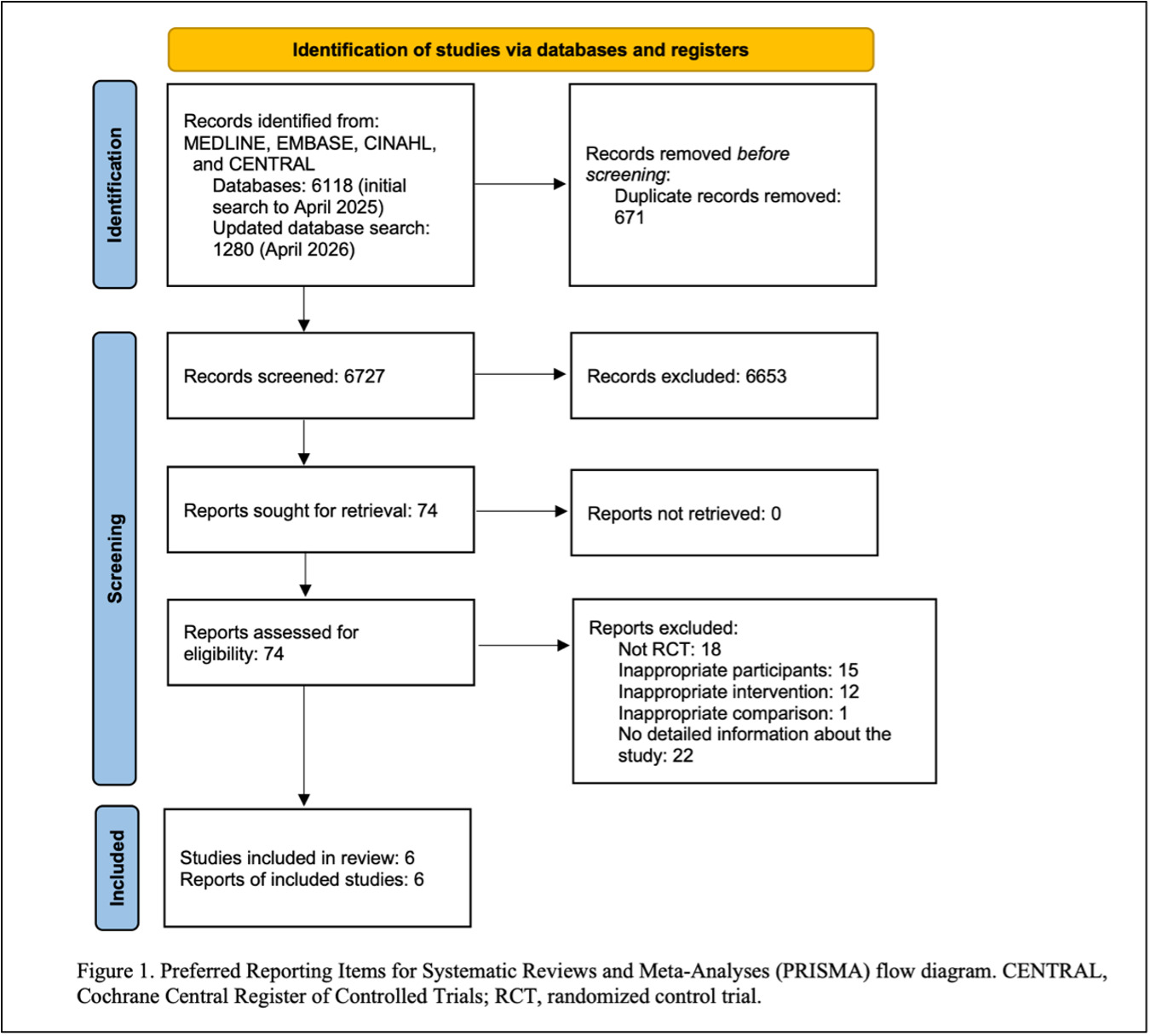
We identified 6,727 records after the removal of duplicates and retrieved 74 records after the screening of titles and abstracts (Figure 1). We further excluded 68 of the remaining records; 18 were the wrong type of study; 15 had the wrong population; 12 had inappropriate interventions; one included an inappropriate control; and 22 had no detailed information about the study. Finally, six studies involving 492 patients met the eligibility criteria of this review.9–11,18–20
Study Characteristics
The characteristics of the included studies and participants are presented in Supplementary Table S1, and details of the MI-E interventions, outcome measurements, measurement time points, and data used in this review are presented in Supplementary Table S2. Two studies used randomized crossover designs. Most included studies evaluated MI-E during invasive mechanical ventilation, whereas Gonçalves et al.9 initiated MI-E as part of an extubation protocol after participants had successfully completed a spontaneous breathing trial and were considered ready for extubation.
Across the included studies, MI-E was generally delivered with insufflation and exsufflation pressures of approximately +40 and −40 cm H₂O, respectively. However, the timing, frequency, and duration of MI-E varied considerably across studies, ranging from a single MI-E session to repeated treatment before suctioning or during the peri-extubation period.
Risk of Bias and Certainty of Evidence
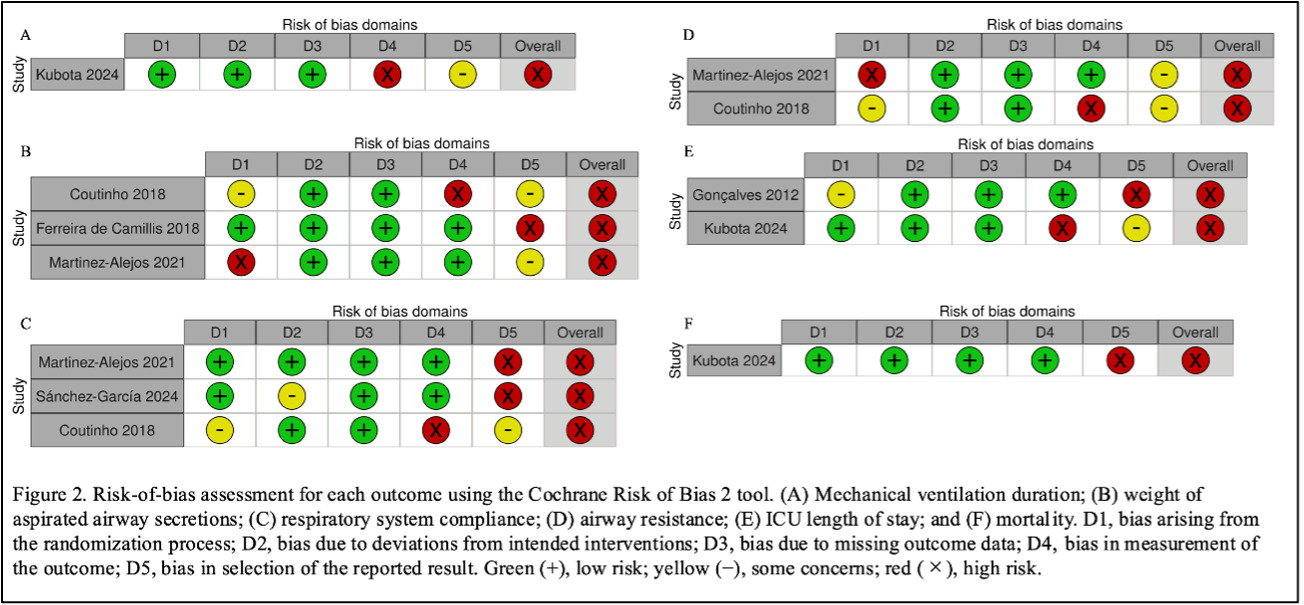
Risk of bias assessments were conducted separately for each outcome using the RoB 2 tool and are presented in Figure 2. The certainty of evidence assessed using GRADE is summarized in the Summary of Findings Table (Table 1). The certainty of evidence for all outcomes ranged from low to very low.
Primary Outcomes
Mechanical ventilation duration
Two studies reported mechanical ventilation duration.9,20 However, data from Gonçalves et al.9 were excluded from the synthesis of this outcome because MI-E was initiated only after participants had successfully completed a spontaneous breathing trial and were considered ready for extubation; therefore, the preceding duration of mechanical ventilation could not meaningfully have been influenced by the intervention.
Consequently, only Kubota et al.20 contributed to the effect estimate. In this study, mechanical ventilation duration was analyzed among surviving participants (MI-E, n = 21; control, n = 18). The reported median duration was 6 days (IQR, 3–9) in the MI-E group and 8 days (IQR, 4–14) in the control group. After conversion of the medians and IQRs to estimated means and standard deviations using the method of Wan et al.,16 the MD was −2.67 days (95% CI, −6.91 to 1.57). The certainty of evidence was very low.
Secondary outcomes
Amount of aspirated secretions
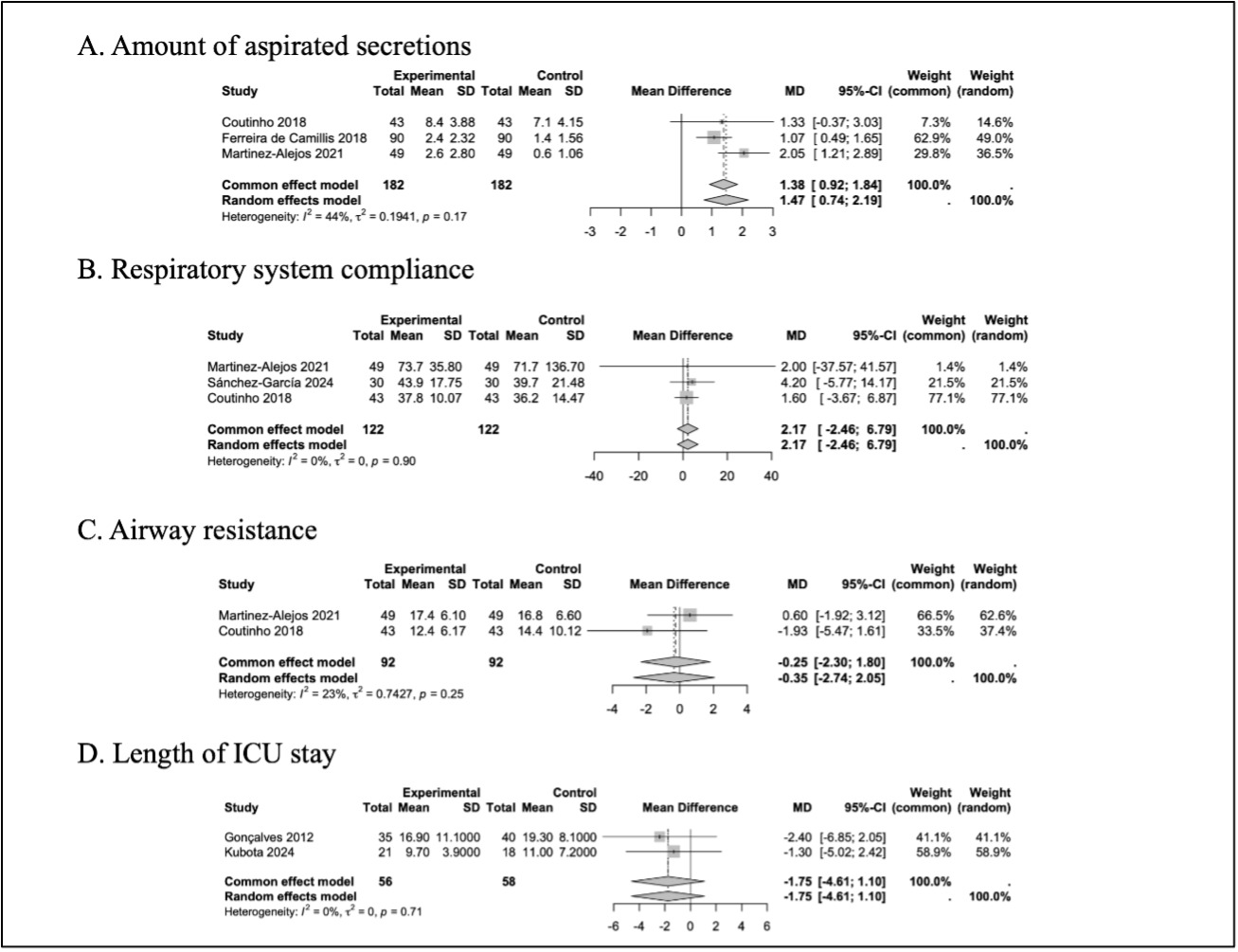
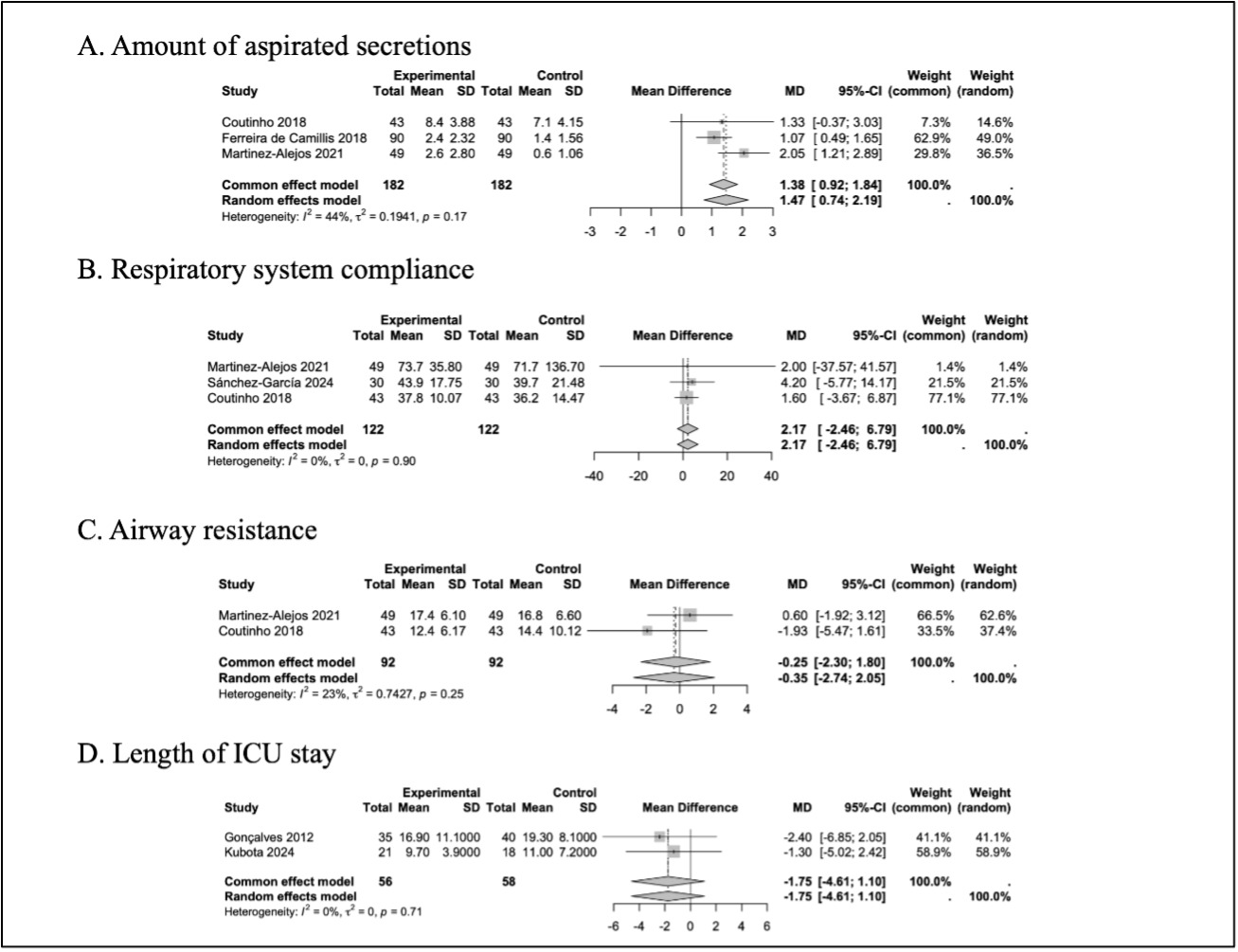
Three studies involving 364 participants reported the amount of aspirated airway secretions.10,11,18 Meta-analysis showed that MI-E increased the amount of aspirated airway secretions compared with the control intervention (MD, 1.47; 95% CI, 0.74 to 2.19; I2 = 44%) (Figure 3). The certainty of evidence was very low.
Respiratory system compliance
Three trials involving 244 participants reported respiratory system compliance.11,18,19 Meta-analysis showed no statistically significant difference in respiratory system compliance between the MI-E and control groups (MD, 2.17 mL/cm H₂O; 95% CI, −2.46 to 6.79; I2 = 0%) (Figure 3). The certainty of evidence was low.
Airway resistance
Two trials involving 184 participants reported airway resistance.11,18 Meta-analysis showed no statistically significant difference in airway resistance between the MI-E and control groups (MD, −0.35 cm H₂O/L/s; 95% CI, −2.74 to 2.05; I2 = 23%) (Figure 3). The certainty of evidence was low.
Length of ICU stay
Three studies reported ICU length of stay.9,19,20 Data from Sánchez-García et al.19 were excluded from the quantitative synthesis because MI-E was administered as a single-session intervention primarily designed to assess short-term safety and tolerability and was not considered comparable with repeated therapeutic MI-E interventions intended to influence ICU length of stay.
Therefore, two studies involving 114 participants were included in the meta-analysis.9,20 In Kubota et al.,20 ICU length of stay was analyzed only among surviving participants; accordingly, the survivor denominators (MI-E, n=21; control, n=18) were used in the analysis. There was no statistically significant difference in ICU length of stay between the MI-E and control groups (MD, −1.75 days; 95% CI, −4.61 to 1.10; I2 = 0%) (Figure 3). The certainty of evidence was very low.
Mortality
Two studies reported mortality.19,20 Data from Sánchez-García et al.19 were excluded from the efficacy synthesis because MI-E was administered as a single-session intervention primarily designed to assess short-term safety and tolerability.
Consequently, only Kubota et al.20 contributed to the effect estimate. At 28 days, 6 of 27 participants (22.2%) in the MI-E group and 3 of 21 participants (14.3%) in the control group had died, corresponding to an RR of 1.56 (95% CI, 0.44 to 5.50). The certainty of evidence was very low.
Discussion
In this systematic review and meta-analysis of six randomized controlled trials, we evaluated the clinical effects of mechanical insufflation-exsufflation (MI-E) in critically ill patients receiving invasive mechanical ventilation in the ICU. Meta-analysis showed that MI-E increased the amount of aspirated airway secretions compared with usual care. In contrast, no statistically significant differences were observed in respiratory system compliance, airway resistance, or ICU length of stay. Evidence regarding mechanical ventilation duration and mortality was limited to a single study for each outcome, and the certainty of evidence for these patient-centered clinical outcomes was very low. To our knowledge, this is the first systematic review and meta-analysis specifically evaluating the clinical effects of MI-E in critically ill adults receiving invasive mechanical ventilation.
The included trials generally evaluated MI-E in selected ICU patients. Most studies excluded patients with lung trauma, pneumothorax, pulmonary emphysema, hemoptysis, or bronchospasm. Serious adverse events related to MI-E were not reported in the included studies; however, adverse events were not systematically assessed or reported in all trials (Supplementary Table S1). Therefore, the available safety data should be interpreted cautiously, particularly when considering MI-E in patients with unstable respiratory or hemodynamic conditions.
Evidence regarding the effect of MI-E on mechanical ventilation duration was limited. After excluding the study by Gonçalves et al. from this outcome synthesis because MI-E was initiated only after participants were considered ready for extubation, only one study contributed to the effect estimate. In that study, the point estimate favoured MI-E, but the confidence interval was wide and included no effect, and the certainty of evidence was very low. Effective airway secretion management remains an important component of respiratory care in mechanically ventilated patients because secretion retention may contribute to atelectasis, impaired gas exchange, ventilator-associated complications, and difficulties in weaning from mechanical ventilation. Previous studies have reported that ineffective cough and retained secretions are associated with extubation failure and prolonged ventilatory support.21,22 Therefore, whether improved airway clearance with MI-E translates into earlier liberation from mechanical ventilation requires further investigation.
The observed increase in the amount of aspirated airway secretions suggests that MI-E may enhance airway secretion clearance in mechanically ventilated patients. MI-E generates alternating positive and negative airway pressures that create high expiratory flows resembling a physiological cough. These rapid pressure changes may mobilize secretions from distal airways toward the proximal airway, thereby facilitating removal through endotracheal suctioning.
The meta-analyses did not demonstrate statistically significant differences in respiratory system compliance or airway resistance between the MI-E and control groups. Respiratory mechanics in critically ill patients are influenced by multiple factors, including lung injury severity, ventilator settings, and fluid balance, which may limit the measurable impact of airway clearance interventions alone.23 Similarly, the meta-analysis of two studies did not demonstrate a statistically significant difference in ICU length of stay. Evidence regarding mortality was limited to a single study after excluding the single-session MI-E study from the efficacy synthesis. ICU length of stay and mortality are influenced by numerous clinical variables beyond airway secretion management, including underlying disease severity, comorbidities, and overall ICU management strategies.24 Moreover, the small number of studies and limited sample sizes resulted in substantial uncertainty regarding these patient-centered outcomes.
Limitations
Several limitations of this review should be noted. First, the number of RCTs was limited, and several outcomes were reported in only a few studies. Consequently, the overall sample size was relatively small, and evidence for mechanical ventilation duration and mortality was derived from only one study for each outcome. In addition, for some outcomes, summary statistics such as means and standard deviations were not directly reported in the original studies and had to be estimated from medians and interquartile ranges. Second, there was substantial heterogeneity across study protocols. Differences were observed in MI-E settings and treatment protocols, including pressure settings, treatment frequency, and timing of application. In particular, MI-E ranged from a single treatment session to repeated interventions delivered throughout mechanical ventilation or during the peri-extubation period. These differences limited the appropriateness of pooling studies for some clinical outcomes. Third, the outcomes reported across studies were heterogeneous. Some trials focused on surrogate measures such as airway secretion volume or respiratory mechanics, whereas others reported clinical outcomes such as mechanical ventilation duration, ICU length of stay, and mortality. Therefore, the available evidence remains insufficient to determine whether the observed effects on airway secretion clearance translate into improvements in patient-centered clinical outcomes.
Further large, well-designed randomized controlled trials using standardized MI-E protocols and clinically relevant outcomes are needed to better clarify the role of MI-E in airway secretion management and ventilator weaning in critically ill patients.
Conclusion
The effects of mechanical insufflation-exsufflation on clinical outcomes in mechanically ventilated critically ill patients remain uncertain because the available evidence is of low to very low certainty. MI-E may improve airway secretion clearance; however, evidence regarding mechanical ventilation duration, ICU length of stay, and mortality remains very uncertain. Further high-quality randomized controlled trials are required.
Conflicts of interest
All authors have completed the ICMJE uniform disclosure form and declare no conflict of interest.
Funding
This study did not receive any specific grant from funding agencies in the public, commercial, or not-for-profit sectors.
Availability of data and materials
The datasets used and/or analyzed during the current study are available from the corresponding author on reasonable request.
Ethical Approval
Not required for this article type. This systematic review and meta-analysis was registered at PROSPERO (registration number: CRD 42025636812).
AI Statement
The authors used ChatGPT (OpenAI) to assist with English language editing and improve the clarity of the manuscript. The authors reviewed and edited the output as necessary and take full responsibility for the final content of the manuscript.