
INTRODUCTION
Electrical impedance tomography (EIT) has been employed in clinical care for over two decades, gaining recognition as a bedside tool to assess and minimize alveolar overdistention, recruit collapsed lung regions, and reduce cyclic tidal recruitment and collapse.1 Relative to pediatric practice, adult EIT clinical practice guidance is mature, with established normal ventilation distribution, standardized methods for recruitability and positive end-expiratory pressure (PEEP) assessment,2 and comprehensive reviews detailing application approaches.3,4 The availability of EIT for pediatric clinical use is relatively new, with pediatric-sized belts available in Canada only since 2021.5 The limited pediatric EIT clinical experience aligns with the limited pediatric-specific guidance, which existing adult guidance does not sufficiently address differences in the pediatric critical care population. Pediatric EIT research has primarily focused on reporting physiological findings from EIT during evaluation of other interventions (e.g., high flow nasal cannula, mode of ventilation),6,7 case studies in clinical use,8 or small case series.9–11 The greater diversity of reasons for pediatric critical care admission, differences in etiology of pediatric acute respiratory distress syndrome (pARDS), and developmental physiological differences12,13 necessitate contextualized approaches to clinical care.
Although experience and evidence supporting EIT as a critical tool for improving patient care remain limited, substantial interest exists within pediatric intensive care units (PICUs). Its non-invasive nature provides advantages over other respiratory tools, such as esophageal balloon manometry, especially in neonatal and pediatric care. EIT facilitates bedside, real-time evaluation of individualized ventilation responses. This individualized approach aligns with pediatric physiologic heterogeneity,12 thereby enhancing prospects for successful implementation. Evidence supporting EIT implementation in clinical practice is similarly limited, with acknowledged challenges to its widespread adoption across clinical settings.14 One contributing factor is that the technology is confined to a few centres, which limits broader clinical knowledge and experience among healthcare providers. Implementation strategies in pediatric critical care often rely on guidance from general intensive care; however, PICUs exhibit significant contextual differences.15 The implementation of advanced respiratory technologies in pediatric clinical care is a niche context with limited guidance. Successful implementation necessitates planned, systematic effort and iterative strategies.16
In Canada, respiratory therapists (RTs) serve as the primary clinical users of EIT, collaborating within the interprofessional team to make decisions related to mechanical ventilation management. This study aimed to describe RTs’ perspectives on EIT use in pediatric critical care, including perceived workload, usability, and barriers and facilitators encountered during implementation of EIT into a quaternary pediatric critical care centre. Given the limited evidence base for pediatric EIT, a study design addressing both implementation and intervention use can assist in knowledge exchange17 and expedite broader translation into clinical practice.
METHODS
Study design
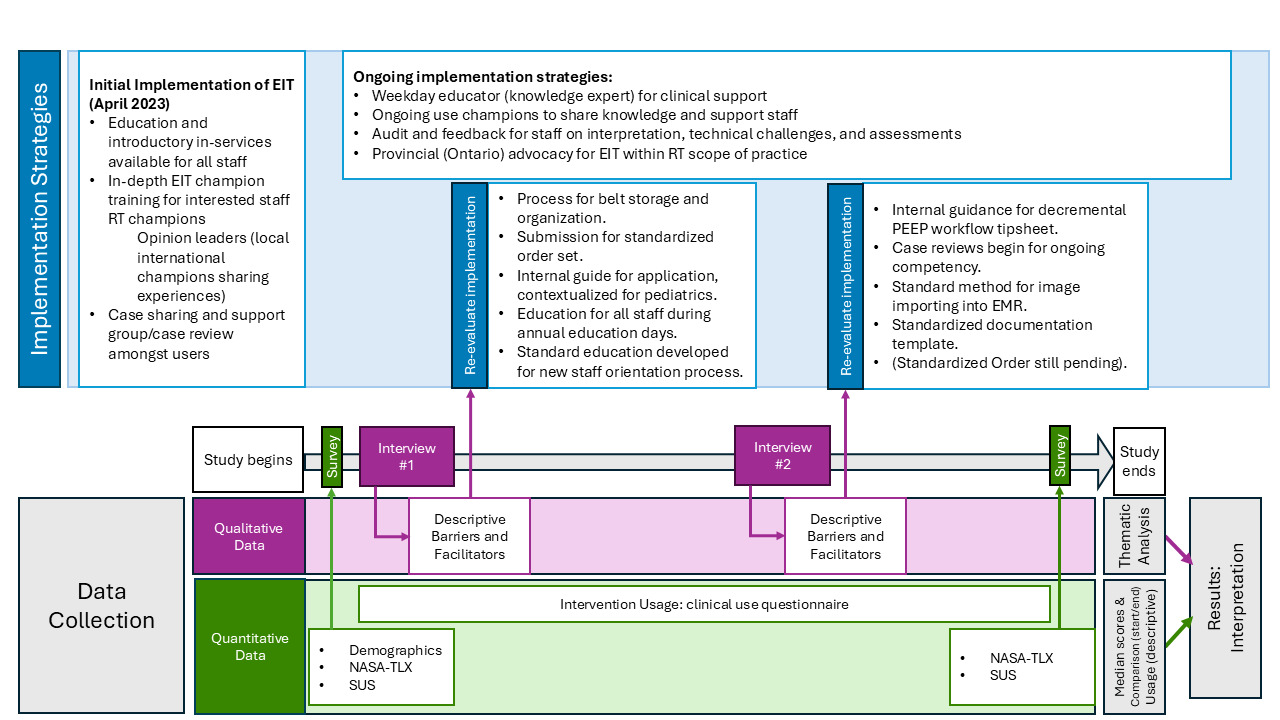
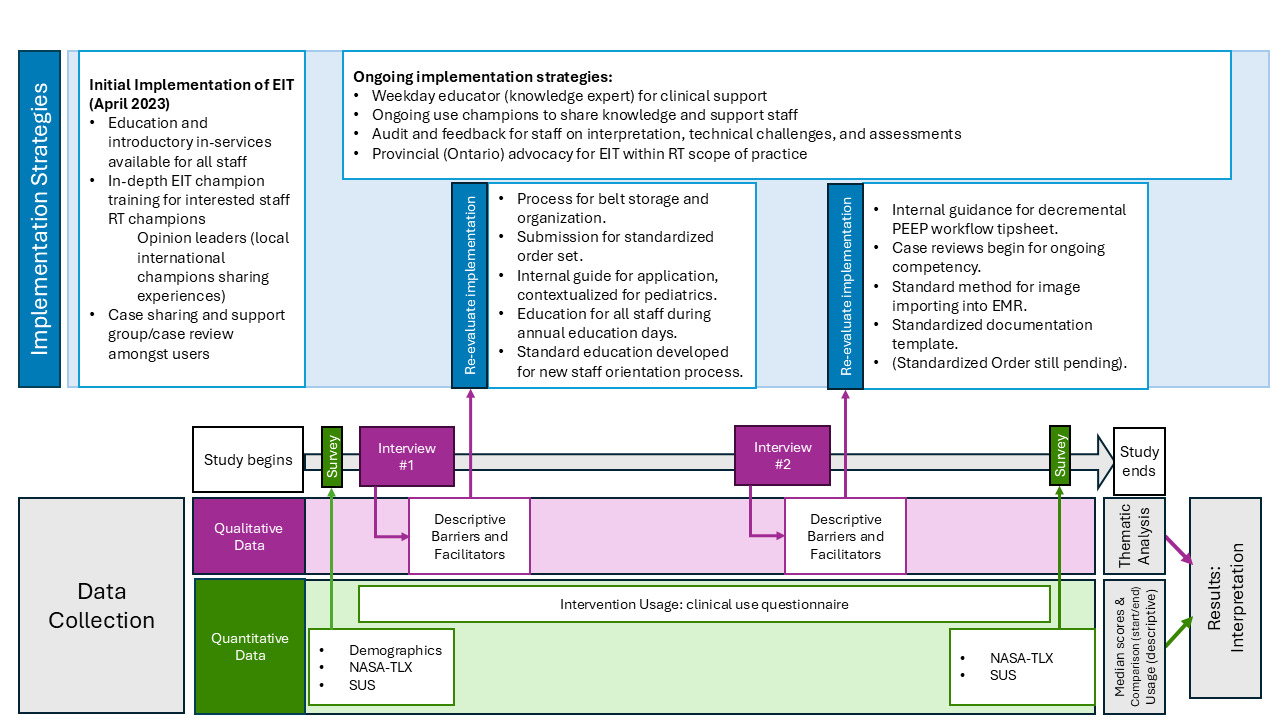
The study was conducted at the Hospital for Sick Children (Toronto, Canada) from December 2024 to January 2026. This study was approved by the hospital’s Research Ethics Board (REB #1000081493). We used a convergent mixed-methods design, collecting quantitative and qualitative data simultaneously during the study period, analyzing them independently before integrating the results.18 This study followed the Standards for Reporting Implementation (STaRI) guidelines19 and the Consolidated Criteria for Reporting Qualitative Research (COREQ).20 Eligible participants were practicing critical care RTs who had completed an 8-hour workshop on EIT using the Pulmovista 500 (Drägerwerk AG & Co. KGaA, Lübeck, Germany) and provided informed consent. Implementation was guided by the Knowledge-to-Action (KTA) Framework.16,21,22 We integrated participants into the KTA step of assessing barriers and facilitators through interviews. Early integration of participants into implementation planning was a strategy for engagement and knowledge exchange.23 Since there are no strong clinical recommendations on the criteria for EIT use in pediatrics, we did not establish any EIT usage targets. Figure 1 summarizes our implementation strategies and data collection timeline.
Implementation setting
SickKids’ Critical Care Unit (CCU) is a 42-bed intensive care area, with two programs: the Pediatric Intensive Care Unit (medical and surgical patients) and the Cardiac Critical Care Unit (pre- and post-operative care for patients with congenital or medical cardiac disease), both regional referral units for their respective patients, managing patients from birth to 18 years of age. The CCU is an academic teaching unit with approximately 2400 admissions annually and an extracorporeal life support (ECLS) program. It consists of a large interprofessional health team, including 14 full-time core critical care RTs, 32 part-time critical care RTs (some of whom are full-time RTs at SickKids with various roles), and 26 casual staff. The RTs collaborate with the medical team to manage respiratory care. The unit also has a large fellowship program with approximately 28 national and international physicians annually and a similar number of rotating physician trainees. A portion of RTs are ECLS bedside providers, and dedicated RT educators support clinical respiratory practice in the unit.
EIT was introduced in the spring of 2023, with ongoing support from clinical members of the study team (KR, BM, LRG, LD) to ensure implementation sustainability and clinical use throughout the study period. The implementation strategies used throughout the study period are summarized in Supplemental Content.
Qualitative data collection
At the start and mid-point of the study, participants were invited to take part in an interview about their experiences using EIT. Participants could choose to participate in focus groups or individual interviews. Interviews were 45 to 60 minutes and were conducted in person or virtually via Microsoft Teams (participants were in a private space). We used both focus groups and individual interviews to gain a comprehensive understanding of the EIT implementation process. Focus groups allowed participants to build on one another’s experiences, revealing shared norms, collective practices, areas of consensus, and points of tension surrounding device adoption.24,25 In contrast, individual interviews provided an opportunity to explore personal experiences, sensitive concerns, and perspectives that participants may have been reluctant to express in a group setting. Implementation is a social process that occurs within teams and organizations and is simultaneously experienced by individuals. The combination of methods enabled a richer understanding of both the social and organizational dynamics of implementation as well as individual perceptions, barriers, and facilitators.26 Using multiple qualitative methods also enhanced the depth and credibility of the findings through methodological triangulation.27
The interviews were semi-structured, using the “Assess Barriers and Facilitators to Knowledge Use” questions from the Registered Nurses’ Association of Ontario Leading Change Toolkit,22 comprised of a series of practical questions that address factors impacting implementation. The questions are partitioned into three categories: micro (individual) level, such as attitudes, knowledge, and beliefs; meso (organizational) level, such as resources, leadership, and culture; and macro (system) level, such as change interventions, processes, and policy alignment. The Leading Change Toolkit uses the KTA framework as one of its foundational frameworks.21 Our interview guide is available in Supplemental Content. An online platform (Microsoft Teams) was used to record the interviews; following each interview, the transcriptions were downloaded, edited for accuracy and readability, and de-identified. Once these steps were complete, the interview recordings were destroyed.
Participants were aware that the interviewers (KR, SQ, MN, all female RTs) were members of the department and that the findings would be used to inform and strengthen implementation efforts. They also understood that the interviewers viewed the introduction of EIT as a potentially beneficial addition to clinical practice. MN was the lead interviewer with a background in clinical research; SQ had a similar background; and KR was an educator responsible for EIT implementation in the CCU. Recognizing that these perspectives could influence data collection and interpretation, the research team engaged in ongoing reflexive discussions throughout the study.27,28 Following each round of interviews, members of the study team (KR, SQ, MN) met to debrief, reflect on emerging findings, and consider potential implementation strategies. These discussions occurred prior to formal qualitative analysis, which was completed after the study period. Two rounds of interviews were conducted to capture experiences at different stages of implementation and to iteratively inform implementation efforts. As the primary purpose of the interviews was to support implementation rather than develop a comprehensive theoretical understanding, we did not seek thematic saturation, although similar themes emerged across both interview rounds.
Quantitative data collection
Participants’ demographic information was collected at study enrollment. Participants’ perceived workload and usability of EIT were collected at the start and the end of the study. Throughout the study, participants reported clinical use. Questionnaires included:
National Aeronautics and Space Administration Task Load Index (NASA-TLX): NASA-TLX measures six facets of workload (mental, physical, time demands, effort, performance and frustration), each weighted by paired comparisons, with a range of 0 (task load minimal) to 100 (task load maximal).29 Originally designed to measure workload in flight training, it has become a widely adopted metric for workload in healthcare and simulation.30 Anesthesia trainees rated moderately demanding medical simulation events with a median NASA-TLX score between 36 and 61.31 The NASA-TLX questionnaire was completed in person with a study team member (KR) due to the complexity of the survey.
System Usability Scale (SUS): SUS is a reliable 10-item scale used to assess the perceived usability of systems and software across several domains (effectiveness, efficiency, and user experience satisfaction). The SUS ranges from 0 (worst) to 100 (best), with scores above 68 considered above average (50th percentile). For mechanical ventilators, a SUS average score of 58 has been reported when the device is new, with user experience and ventilators with strong familiarity achieving higher scores.32 The SUS also has correlated descriptors ranging from “hard” (low score) to “simple to use” (high score). The demographics and SUS were administered through an online survey.
Intervention usage: Throughout the study period, EIT was available for clinical use for any patient, except those with cardiac pacing (a contraindication to EIT). After clinical use, participants were invited to complete a brief questionnaire to describe their clinical experience (what assessments were performed, size of belt, duration of assessment), including reasons for using EIT and any successes and challenges encountered in the clinical setting. Patient research consent was not obtained because EIT was used clinically following consent for clinical care, and the SickKids REB waived research consent because the survey collected only de-identified, generalized usage data. Intervention usage was collected from January 2025 to December 2025. If the survey was not completed, it was completed retrospectively in collaboration with the participants.
Data analysis
Qualitative data
Qualitative data were analyzed using a framework-informed thematic analysis.33 We initially adopted a deductive approach informed by existing implementation literature,22 with the assumption that barriers and facilitators to EIT implementation would reflect previously identified factors applied within a new context. Following transcription and de-identification, each interview was reviewed by at least two study team members (KR, SQ, MN).
An initial coding framework was developed based on established implementation constructs, including barriers and facilitators operating at micro-, meso-, and macro-levels.16,22,34 KR conducted the initial coding and identified patterns across the interviews, supported by representative quotations from participants. Preliminary codes and interpretations were subsequently reviewed and refined through iterative discussions with other members of the research team (SQ, BM, LRG, LD). During this deductive analysis, it became apparent that the participants’ experiences frequently spanned multiple implementation domains and often reflected tensions between competing priorities or perspectives. To better capture these complexities, the data were re-examined inductively (BM), allowing themes to emerge directly from participants’ accounts rather than being constrained by the initial framework.35 The resulting themes were reviewed and refined by the entire study team.
Final interpretation involved integrating the deductive and inductive findings into a conceptual model of EIT implementation. This model was developed by KR and BM and subsequently reviewed with participants through member checking27 to enhance the credibility and trustworthiness of the findings.
Quantitative data
All quantitative data were described using means and standard deviations or medians and interquartile ranges for continuous variables, and proportions and percentages for categorical variables. We compared the NASA-TLX and SUS scores at the start and end of the study using a non-parametric Wilcoxon signed-rank test. Statistical analyses were performed using SPSS Statistics for Windows, version 31.0 (SPSS Inc., IBM, Chicago, Illinois, USA). For all tests, a p-value of <0.05 was considered significant.
Analysis of the quantitative and qualitative data was first completed independently and then merged at the end of the study, with careful consideration of coherence, complementarity, and dissonance in interpreting the data.
RESULTS
A total of 18 staff RTs were eligible for the study and received an email invitation; 16 were directly approached, and 14 provided written informed consent and were enrolled in the study (11 females, 79%). Three participants did not complete the second data collection point because of a change in work status (e.g., parental leave). The median (interquartile range [IQR]) age was 38 (34.5, 46.6). The median (IQR) years of RRT practice and pediatric practice were 14 (6.5, 18) and 8 (4, 16.5), respectively.
Qualitative results
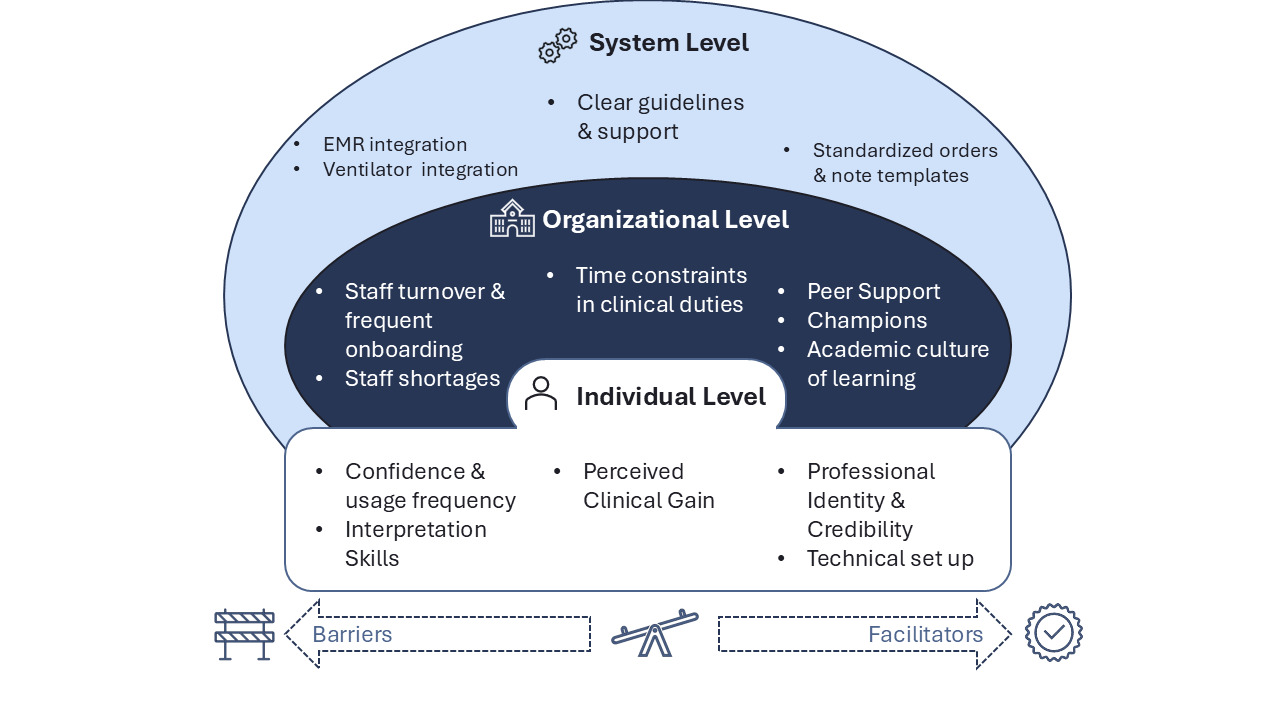
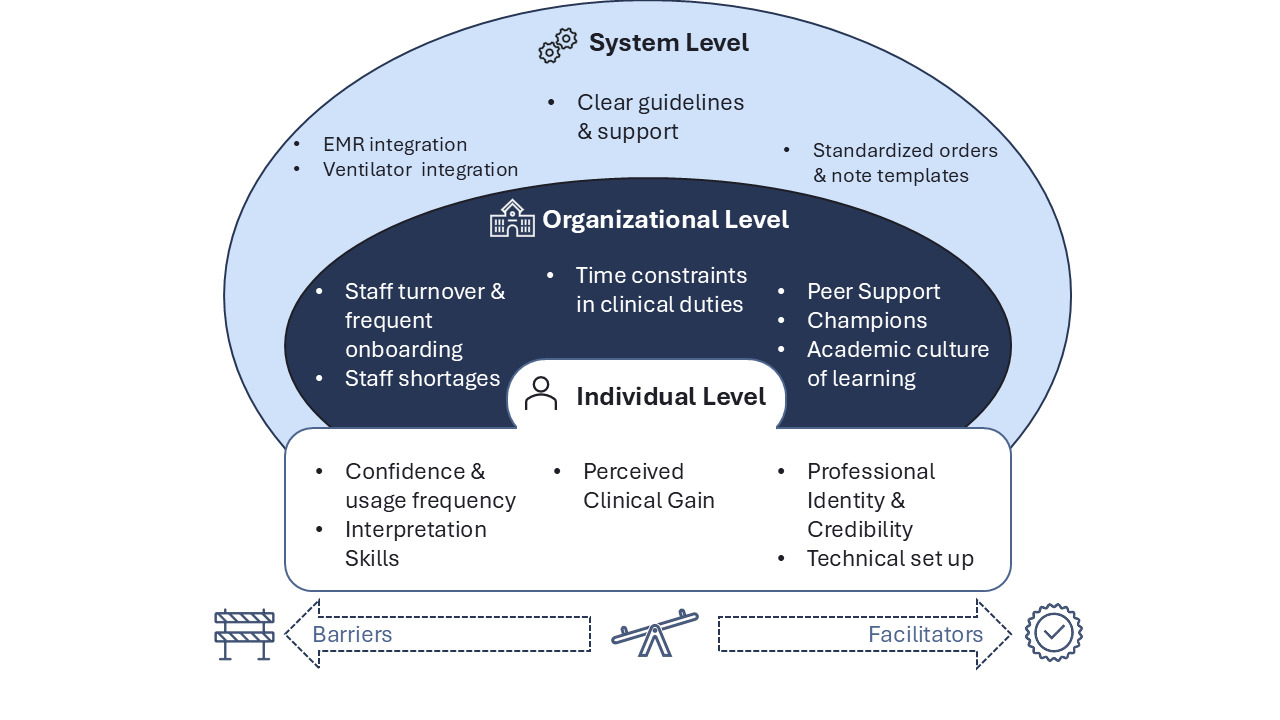
We conducted eleven interviews at two study time points (start and mid-study), yielding 20 independent contributions from the 14 participants. Specifically, 7 individual interviews were conducted at the start (4 interviews) and mid-study (3 interviews). The remaining 4 were group interviews: 2 at the start (4 and 3 participants) and 2 mid-study (2 and 4 participants). Our qualitative analysis revealed that implementation of EIT was shaped by interacting influences at the individual, organizational, and system levels. Rather than discrete barriers and facilitators, participants often described tensions between perceived value, expertise development, and operational feasibility.
Individual level: Expertise development and perceived added value
At the individual level, engagement with EIT contributed to professional identity formation among respiratory therapists (RTs). Participants described becoming local “go-to” resources and informal educators, reinforcing autonomy and credibility within the interprofessional team. EIT was perceived as advancing practice by introducing objective and real-time visual data into respiratory management.
EIT, it makes us look a little bit more intelligent, right? There’s more depth to our conversation. I think that gives us more value, not that we’re not valued, but more credibility and value to what we say because there are numbers. (Participant 2)
From medical team, the number of times that fellows ask to be present and ask for teaching and explanations, [EIT brings] value to our team knowing that they’re valuing it. (Participant 10)
However, experiences varied along two continua.
First, perceived complexity: while the technical setup (belt placement and calibration) was described as straightforward, interpreting EIT data (particularly in spontaneously breathing patients) was cognitively demanding. Confidence was closely tied to frequency of use; prolonged intervals without application led to diminished comfort and perceived skill decay.
Setting it up, picking the right size belt and doing that initial setup is pretty straightforward. It’s applying to each individual patient, looking at what the results that you’re getting, tying it in with the patient and being comfortable to say, ‘I know what is going on with what I’m seeing.’ (Participant 4)
Second, perceived added value: some participants reported that EIT largely confirmed bedside assessments and existing ventilator strategies, resulting in limited incremental benefit. Others described EIT as enhancing clinical confidence, particularly in decisions such as whether to use higher PEEP, by providing non-invasive, real-time visualization of regional ventilation. In these cases, EIT functioned both as a validation of established expertise and as a tool that refined precision.
My experience with EIT thus far has been that the results have always been within 1 cmH2O of what clinically, we could assess at the bedside without it. You know, we do a decremental PEEP study or something on our own and find what optimal PEEP is for the patient. (Participant 5)
I think EIT is probably a good way to make us feel more comfortable with using higher PEEPs. If we can show the fellows and ourselves that a PEEP of 16 cmH2O is sometimes what’s needed and we’re not actually causing harm, I think EIT is probably a good tool to reassure us of that. (Participant 1)
Thus, at the individual level, adoption reflected a negotiation between cognitive investment and perceived gain.
Organizational level: Academic culture and capacity constraints
At the organizational level, implementation occurred within an academic ICU characterized by a strong culture of teaching, innovation, and peer collaboration. Informal consultation among RTs, shared learning, and the presence of clinical champions facilitated uptake and normalized EIT within team discussions.
I have asked [participant 10] about it before and they’ve helped, and [participant 2] was a great resource and helped me set it up on a patient on the weekend. (Participant 13)
Particularly when [physician champion] is on [service], … it becomes more of a conversation in the RT room. (Participant 1)
I send a text message to the CCU group on our work phones and then say, ‘Hey, we’re doing EIT. Please come if you’re able.’ (Participant 9)
Simultaneously, structural features of the academic environment created friction. Continuous turnover of fellows and staff required repeated onboarding and limited consolidation of expertise. Junior staff demonstrated openness to adoption but required support or supervision, while senior staff were frequently constrained by competing clinical demands.
I think one [issue is] staffing. It’s unfortunate to say, but there were a lot of junior staff, so I think it’s a comfort level; seniors are busy supporting other aspects [of clinical care]. (Participant 8)
We have a lot of new fellows right now, so they also probably aren’t as comfortable with it or have even asked for it yet. (Participant 3)
The time-intensive nature of conducting EIT studies, including multidisciplinary coordination and documentation, further limited routine use in a high-acuity setting. The available time (both among available trained clinicians and within the clinician’s daily assigned workload) was the most frequently reported challenge.
The hesitation is always time: [describing workflow]. The timing of fellow, RT, nurses - the multidisciplinary team being together at one point in time can be very challenging with such a fast-paced ICU environment, right? (Participant 2)
I felt like we’re constantly trying to squeeze the EIT in between all the tasks. I felt like that was the biggest problem in [using EIT]. Just trying and knowing that this is going to be time-consuming. I felt like that was the hardest part - trying to schedule it in. (Participant 8)
Importantly, these constraints reflected workload and capacity pressures rather than resistance to change.
System level: Structural integration and standardization
At the system level, infrastructural factors influenced sustainability. Limited belt sizes for smaller infants restricted use in some cases. Lack of seamless integration with electronic medical records increased the documentation burden, requiring manual image transfer and additional time.
If there’s a way for EIT to be implemented into [the EMR] more easily – now, we’re just taking pictures on [work phones] and uploading them, and it’s time-consuming. (Participant 8)
Participants also highlighted the absence of clear clinical indications or standard guidelines for when and how EIT should be used, though they hesitated to describe universal indications. Integration within ventilator systems, standardized order sets, documentation templates, and accessible training resources were identified as mechanisms that could reduce friction and support normalization.
I think if we’re able to help people have a better understanding of it and they realize when it’s appropriate and we start using it at the right times and we can prevent things from getting worse, I think more people will recognize the importance and value of it. (Participant 6)
If you could just push a button and it would show you EIT - the cables already attached to the ventilator, you attach the belt and that’s it. I feel like that would be a perfect world. (Participant 5)
A conceptual model of the qualitative results is shown in Figure 2.
Quantitative data
Over the course of the study period, EIT was utilized successfully 32 times, with a summary provided in Table 1. There were no reported patient complications or safety events because of EIT. In addition to these uses, there were three reported technical challenges in EIT application: two instances involved patients with small chest circumferences below the lowest belt size (and weighed ≤3 kg), while the third failure occurred in a patient on ECLS with very small tidal volumes (<2 mL/kg). In these cases, the belt contact was inadequate, or the signal was low, respectively, leading users to halt EIT assessment due to unreliable data/lack of image. The reported duration of EIT assessment ranged from 30 (for distribution assessment) to 240 minutes (for multiple interventions and PEEP titration), with a median (IQR) duration of 60 (45, 70) minutes (n = 27, 5 missing data). Assessments involved a median (IQR) of 2 (2, 2.75) RT staff, and bedside physician presence in 33% of cases (n = 32), with all respiratory decisions made collaboratively with the interprofessional team.
The NASA-TLX scores and SUS are presented in Table 2, with a visual representation of the NASA-weighted workload components available in the Supplemental Content. The mean NASA-TLX was 46.1 and 40.7 at the start and end of the study, respectively, indicating a task described as moderately demanding. When reviewing the domains of NASA-TLX individually, effort significantly decreased from the start to the end of the study. The mean SUS was 58 and 56.8 at the start and end of the study, respectively, representing a system with marginally low acceptability, or can be described as “okay” to “good.”36 Over the course of the study year, there was no statistically significant change in participants’ perceived usability or overall workload score.
Table 3 presents the integration of the qualitative and quantitative data, alignment of results (fit) and an interpretation related to implementation of the collective findings.
DISCUSSION
We present our implementation and clinical experiences of pediatric RTs using EIT in a quaternary care pediatric unit. Our main finding is that, with well-structured implementation processes, the clinical use of EIT in this environment is feasible and was perceived by participants as assisting with challenging ventilation cases. The implementation of EIT was shaped by intersecting dynamics: individuals’ expertise development, comfort, and perceived added value; organizational culture and capacity constraints; and system integration and standardization. Participants reported that adoption was not primarily limited by skepticism about EIT technology. Rather, uptake depended on whether the perceived clinical and professional value of EIT outweighed the cognitive, competing clinical demands, and infrastructural limitations of embedding it in routine practice. Over the course of the study year, participants’ overall perceived system usability or the perceived workload associated with EIT did not statistically change.
As with any new technology or practice, implementing EIT in clinical care requires motivated, proactive healthcare providers who understand the underpinning respiratory physiology and believe in its potential to improve care.37 Our experiences largely mirrored pediatric cases on PEEP assessment,8,10,38 following stepwise increases and decreases in PEEP consistent with adult protocols.2 We observed that PEEP assessment with EIT was relevant across all patient sizes and a wide range of disease states, although ranges in PEEP were individualized to patients. We also heard experiences that PEEP assessment based on global respiratory system compliance largely aligns with EIT-based regional compliance methods, as previously reported in children,39 adding questionable value to assessment. Despite this finding, many participants valued EIT assessment in challenging cases, or for selecting higher PEEP values, which may be contextually relevant, as a higher fraction of inspired oxygen (FiO2) with individualized PEEP is often tolerated, rather than following the PEEP/FiO2 table recommended in pARDS guidance.13,40,41 We also found utility in EIT’s real-time images for assessment in proning, bronchoscopy, and in patients with airway compression, which has not been reported in the literature and warrants further exploration. Gaps in technology still exist for extremely small pediatric patients, and clinical tools for interpreting EIT in spontaneous breathing remain insufficient. The latter is noteworthy in pediatrics, given that the transition to spontaneous ventilation occurs earlier than in adults.
A possible explanation for the lack of statistical change in workload and usability is that our timeline was too short to detect a change, and adoption is ongoing, given that each user had a small number of clinical exposures. Both the quantitative and qualitative data at the individual level support this explanation. In the qualitative data, some participants described their level of comfort with EIT as low, which influenced their likelihood of recommending its use. This qualitative reflection is possibly complemented with the SUS scores being similar to those reported by users operating a new ventilator.42 In addition, mental demand was the largest component of the NASA-TLX, suggesting a high degree of focus in alignment with new or infrequent skills. From our implementation experience, participants had little to no experience with EIT before receiving internal hospital training. In combination with RTs’ heavy reliance on internal training for professional development,43 educational interventions and support were essential (and ongoing) for any chance of implementation success.
Another explanation for the lack of statistical change is that our implementation strategies did not address larger, more influential organizational and system-level barriers. Participants reported the workload as moderately demanding, consistent with NASA-TLX scores in other healthcare studies.44 Qualitatively, EIT was highlighted as time- and resource-intensive, and quantitatively, it was reported to require at least 1 hour and multiple clinicians during EIT. All measures expressed a degree of perceived work with EIT, which was a barrier to greater use. Many of the organizational and system-level factors that could improve workload or streamline processes were non-modifiable during the study period, such as RT staffing and the EIT device being a stand-alone device with no connectivity to the EMR, which participants described as increasing the overall time to EIT assessment. The convergence of existing barriers across all levels should be carefully considered for those considering investment in EIT technology for clinical use.
Our study provides an insightful description of end-users’ perspectives on EIT and outlines barriers that may be encountered during implementation. There are many implications and implementation strategies that could be drawn from this. At the individual level, this includes: 1) encouraging available staff to assist EIT studies for their experiential learning and exposure, 2) devising case-sharing methods for clinician reflections, 3) offering simulations to supplement competence and comfort, 4) supporting external networking and professional development opportunities to motivate learning, and 5) developing local reference tools and resources to reduce mental demand during use. Future research is needed to identify the most effective implementation strategies to support user comfort and skill retention, and under which circumstances each discrete strategy is effective.
At an organizational level, devising a staffing model or practice model that focuses on skill development for a smaller group of clinicians is another possible strategy, such that each user has greater exposure to EIT and experiential learning opportunities to develop expertise. A clinical support model, such as a lung rescue team, may enable EIT expertise to develop within a smaller group of individuals and provide dedicated time for these assessments.45 Lastly, at the systems level, leaders and local experts should engage with industry to advocate for EIT systems and designs that remove barriers to streamlined and simplified workflows for clinicians. Our experience required ongoing educational and clinical-champion advocacy for sustainability in our environment, which was characterized by high staff turnover. As additional research findings and clinical experience accumulate, greater clarity about which patients would benefit from EIT assessment will enhance prospects for wider clinical adoption. This understanding also provides greater clarity for implementation targets from which teams can define successful implementation.
This was a single-centre observational study that captured the perspectives of a small group of RTs. Although these perspectives are valuable, they reflect a single professional identity and institution, which may differ from those of other professionals or centres. Our results may also be subject to volunteer bias: the participants may represent RTs with greater baseline interest in EIT. We chose to focus on RTs at our institution because they are the primary users of EIT in our clinical environment, and this approach was feasible for this small project. This is the first study to capture the perspectives of the ultimate end-users of this technology, rather than perspectives of clinical leaders and researchers.14,46 Strengths in our reporting include the use of validated subjective scales previously used in respiratory evaluations,32,42 and the complementary alignment of the quantitative and qualitative data with no detectable divergence, which strengthens the findings. We have also documented our implementation approaches, which centres looking to integrate EIT into clinical practice may find useful.
CONCLUSION
Implementation of EIT is feasible in pediatric critical care with RTs recognizing the technology’s potential to enhance decision-making in complex respiratory cases. The choice to use EIT clinically depended largely on individuals balancing organizational workload demands against the perceived potential value it could add to their existing clinical assessments, though it was also influenced by ongoing confidence in conducting EIT studies and system-level barriers. Users perceived the system as having moderate system acceptability and workload, which did not statistically change over the course of a year despite ongoing implementation support. Moving forward, continued training and clinical support, along with efforts to address organizational and system-level barriers, will support further adoption in pediatric critical care practice.
STATEMENTS AND DECLARATIONS
Acknowledgements
We would like to acknowledge the respiratory therapists who participated in this study and contributed to this project, without whom it would not have been possible.
Funding
This work was supported through the Canadian Society of Respiratory Therapy Research Grant.
Conflicts of interest
All authors have completed the ICMJE uniform disclosure form and declare no conflict of interest.
Ethical approval
This study was approved by the Hospital for Sick Children Research Ethics Board (REB #1000081493). Informed consent was obtained from all participants.
AI Statement
During the preparation of this work, the authors used Grammarly (San Francisco, CA, USA) to enhance language and readability using grammar checking (not AI tools). We used Microsoft Copilot to draft Table 3, which was heavily edited from original AI content. The final manuscript was reviewed and further edited, and the authors accept full responsibility for the publication’s content.