
Introduction
Chronic respiratory diseases remain a major public health concern because of their significant contribution to global morbidity and mortality.1 Approximately 300 million people worldwide are affected by asthma, and this number is expected to reach 400 million by 2025.2 In Türkiye, the prevalence of asthma is reported as 6.2% in women and 2.8% in men.3 Although asthma-related mortality accounts for less than 1% of deaths worldwide, asthma continues to represent an important global health problem, with marked international variation reported by the World Health Organization.1
Asthma is a chronic inflammatory airway disease involving multiple inflammatory cells and mediators and is associated with substantial physical, psychological, and social consequences.4,5 It is characterized by recurrent episodes of cough, wheezing, and shortness of breath, often accompanied by bronchial hyperreactivity, in which eosinophils and mast cells play a predominant role.4 Symptoms frequently worsen at night and during physical activity, leading many patients to avoid exercise, certain occupations, and social participation, which negatively affects daily functioning and quality of life.5 Psychiatric comorbidities, including anxiety and depressive features, are commonly observed and further complicate asthma control.5
Beyond its respiratory manifestations, asthma imposes substantial social, economic, and psychological burdens. Recurrent emergency department visits, fear of exacerbations, continuous treatment demands, and exposure to triggers such as pollen, smoke, medications, and cold air place persistent stress on patients, contributing to emotional distress, social isolation, and impaired social functioning.5 The chronic and unpredictable course of the disease may further alter self-perception and psychological well-being, making asthma control more difficult and adversely affecting overall quality of life.3,6,7
The principal objective of contemporary asthma management is to achieve and maintain optimal disease control.8 Consistent with other chronic illnesses, treatment adherence in respiratory diseases has been reported to be suboptimal.9 Treatment adherence refers to the extent to which patients follow medical recommendations, including the correct and sustained use of prescribed medications over time.9,10 Treatment adherence is influenced by multiple determinants, including psychological and cognitive factors, cultural and socioeconomic conditions, and patients’ knowledge and beliefs about asthma.6,11 Poor treatment adherence worsens symptom control, increases exacerbation rates, and negatively affects physical, psychological, and social functioning.
Gater et al. emphasized that monitoring asthma symptoms is essential for understanding patients’ daily experiences and quality of life.12 Accordingly, this study aims to qualitatively evaluate treatment adherence and the psychosocial challenges experienced by patients with asthma in their daily lives.
Materials and methods
The sample was selected using a purposive sampling approach to maximize variation among patients attending the outpatient clinic. The study population consisted of 12 patients with asthma (6 males and 6 females), aged 19–75 years, who were diagnosed in accordance with current Global Initiative for Asthma (GINA) clinical guidelines.11 Participants were recruited from adult patients attending a pulmonology outpatient clinic in a public university hospital in Istanbul, Türkiye. Participants were in a stable clinical condition at the time of data collection, with no acute exacerbations. All participants had moderate to severe asthma, with persistent symptoms that significantly affected their daily lives.
According to GINA11 guidelines, asthma severity is assessed retrospectively from the level of treatment required to control symptoms and exacerbations. It can be assessed once the patient has been on controller treatment for several months and, if appropriate, a treatment step-down has been attempted to determine the patient’s minimum effective level of treatment. Asthma severity is not a static feature and may change over months or years.
Asthma severity can be assessed when the patient has been on regular controller treatment for several months. Therefore, the severity of an asthma patient being either severe or moderate was not presented in Table 1 in our findings. This can also be considered a limitation.
Mild asthma: Asthma that is well controlled with Step 1 or Step 2 reliever medication alone or with low-intensity controller treatment such as low-dose ICS, leukotriene receptor antagonists or chromones.11
Moderate asthma: Asthma that is well controlled with Step 3 treatment, e.g., low-dose ICS/LABA.11
Severe asthma: Asthma that requires Step 4 or Step 5 treatment, e.g., high-dose ICS/LABA, to prevent it from becoming ‘uncontrolled’ asthma that remains uncontrolled despite this treatment.11
Several studies have demonstrated that asthma significantly affects patients’ quality of life, with a more pronounced impact observed in individuals with moderate to severe disease compared with those with mild asthma. These effects extend beyond physical symptoms to include psychological burden, emotional distress, and social limitations. Excluding patients with clinically significant asthma could limit the generalizability of the findings and introduce bias by underrepresenting the lived experiences and challenges of individuals most affected by the disease. Therefore, patients with clinically significant asthma were intentionally included in this study to comprehensively explore the multidimensional impact of asthma on health.
Patients with difficulties in cooperation, diagnosed psychotic disorders, acute asthma exacerbation within the past 30 days, recent systemic corticosteroid therapy, or active acute respiratory infections at the time of recruitment were excluded from the study.
A mini questionnaire and a semi-structured question guide were used in the study. The mini-questionnaire included questions on their sociodemographic information and clinical status, while the semi-structured question guide inquired about problems encountered in coping with asthma, particularly those concerning social life. Data were collected via an in-depth face-to-face interview. The interviews were audio-recorded after obtaining participants’ consent. Each interview lasted 40-60 min. A private room was used for the interviews to ensure that the participants felt safe and comfortable. All participants had previously met with their physicians and discussed their illnesses in similar rooms at the same polyclinic.
The interviews were conducted by four medical students (both male and female) who had prior training in qualitative research methods. In the medical school where the researchers worked, medical students are given both theoretical and practical courses on quantitative and qualitative studies, including research planning, data collection, data analysis, data interpretation, and writing a report in grades 1-3 and 6th grade; furthermore, they organize a student congress and present their research at the congress every year. In this particular study, they were additionally trained in conducting interviews, moderating, and observing, first by carrying out role-plays and then conducting repeated pilot studies both in the field and at the hospital. At the training sessions, active listening, asking non-leading questions, using unbiased neutral body language, neutral, unbiased questioning, how to ask probing questions, creating a comfortable, trusting interviewing environment, and managing ethical considerations were practiced. They were trained together by the same trainers to minimize bias. Reflexive sessions were carried out at the end of each training session. The full research team included three assistant doctors (MDs), one MD professor, and one non-MD professor. No prior relationship existed between the researchers and the participants before the study. Participants were briefed on the general objectives of the research. The interviewers maintained a specific interest in asthma, which served as a focal point for the study’s thematic direction.
Two researchers were involved in each interview. The first researcher conducted the interview and asked the questions. In all interviews where voice recording was not permitted, the second researcher was included, with the participant’s permission, to take notes and observe the participant’s body language and the interview atmosphere.
Data analysis
Qualitative data analysis was used to systematically code and interpret the interview data and to identify key themes related to the research phenomenon. The data analysis utilized the following stages: data preparation (bracketing), phenomenological reduction (stepping and phenomenological reduction), creative variation (imaginative variation), and revealing the essence of the experience (synthesis of meanings and essences). Each transcript was analyzed separately by two different researchers.
The interviews were stopped when the researchers reached consensus that no new information could be obtained from the participants’ responses. In other words, data saturation was agreed to be reached after interviewing 12 participants, following each researcher’s listening to the audiotapes two to three times and attempting to comprehend the participants’ experiences and feelings.
The statements were written separately for each participant and coded with the page and line numbers of the transcript. Meanings were formulated from the significant statements and discussed within the research team.
In selecting quotations/anecdotes, all statements related to the phenomenon were first listed. Then, statements irrelevant to the phenomenon were removed, and a list of important statements was created. In this stage, referred to as “identifying units of meaning,” statements that were found to shed light on the phenomenon under investigation were “isolated.” After obtaining formulated meanings from significant statements, the researchers arranged them into clusters of themes. These theme clusters were reduced to emergent themes, which were then agreed upon as either sub-themes or themes. To this end, themes and subthemes were determined after the research team reached consensus on the codes.
Thematic and open coding were used to extract themes. In addition, the data analysis followed the Colaizzi phenomenological design, which provides a rigorous and systematic framework for analyzing qualitative data by focusing on participants’ lived experiences. This method involves identifying significant statements, formulating meanings, clustering these meanings into themes, and developing an exhaustive description of the phenomenon, condensing the exhaustive description down to a short, dense statement that captures just those aspects deemed to be essential to the structure of the phenomenon.
Researchers first created separate code lists to ensure inter-coder reliability and coding consistency; later, they collaborated to develop a common coding manual. This common coding manual and memos (interviewee and observer notes) were used to ensure validity, intercoder reliability, and coding consistency.
Memos were used to document analytic decisions made during the development of codes, sub-themes, and themes and were compared among the researchers. This method was adopted to ensure consistency, intercoder agreement, and trustworthiness. The approach was followed exhaustively until saturation was achieved and no new themes emerged. Reliability and consistency were examined regularly through frequent comparisons of the transcripts. Validity was supported through the use of a coding manual to enhance intercoder reliability and coding consistency.
For confirmability, attention was paid to ensuring consensus among multiple researchers on a phenomenon. Furthermore, an audit trail was used for internal validity. Records kept for the audit trail, raw data, written notes, summary notes, code lists, etc., were used. Participant confirmation could not be performed.
A sample size of 12 asthma patients would not provide adequate representation of the whole population of asthma patients. While in quantitative research, researchers try to generalize findings to the population for external validity, in qualitative research, transferability can be partially used, and findings most of the time represent only the sample population; furthermore, in qualitative research, researchers aim to generalize the results obtained through data analysis to events with similar characteristics. In this study, transferability was partially achieved by interpreting the findings in light of research with similar characteristics. This is presented as one of the limitations of our study.
In presenting the findings in an article format, common statements/quotations have been grouped. When presenting common statements/quotations in the Findings section, priority has been given to more original and striking statements, but care has been taken to ensure that statements/quotations from some participants are not overly prominent and that at least one statement from each participant is included.
ATLAS.ti was used for data analysis. The stages of data preparation and familiarization, identifying significant statements, formulating meanings, clustering themes, developing an exhaustive description, and producing the fundamental structure were applied in accordance with the Colaizzi design. The seventh step of Colaizzi’s design (validation by participants) was not conducted because the researchers were unable to reach the participants after the analytical interviews.
Consolidated Criteria for Reporting Qualitative Research (COREQ) were adhered to throughout all stages of the study.13
Ethical Considerations
Verbal informed consent was obtained from participants before the interview began, and patients who did not provide consent were excluded from the study. Voice recordings were made during the interviews with the participants’ permission. The interviews continued with different questions, in some cases by replacing some items in the questionnaire. The participants were assured of the confidentiality and anonymity of their information, enabling them to respond freely. The participants were informed before the interview that they could not use their names and could use a nickname if they wished. The participants’ data were protected in the voice recordings and analyses and were not shared with any third party or institution. The data have been presented anonymously in this paper.
The study was approved by the ethics committee of the University Faculty of Medicine and complied with the principles of the Declaration of Helsinki. The participants were free to leave the study at any time and were informed of the same before the start of the study.
Results
In this qualitative study, the experiences of 12 adult patients with asthma regarding their diagnostic and treatment processes, as well as the impact of the disease on their social lives, were explored through in-depth interviews. Participants were recruited from the pulmonology outpatient clinic of a public hospital in Istanbul, Türkiye, and their sociodemographic characteristics are presented in Table 1. Of the 12 participants, 6 (50%) were female, and ages ranged from 19 to 75 years. The study sample included both current smokers and non-smokers, allowing for their treatment experiences and daily life challenges related to asthma. Several participants also reported having accompanying chronic conditions in addition to asthma.
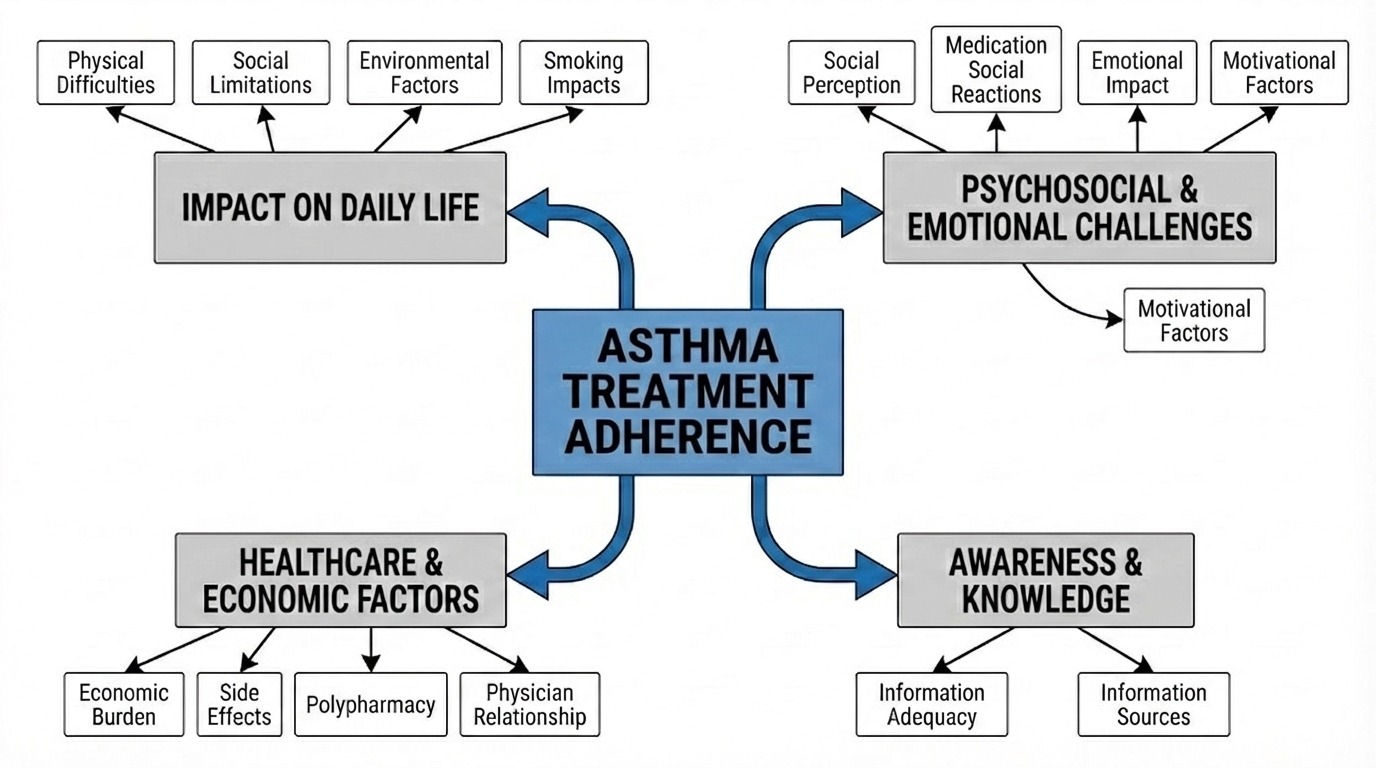
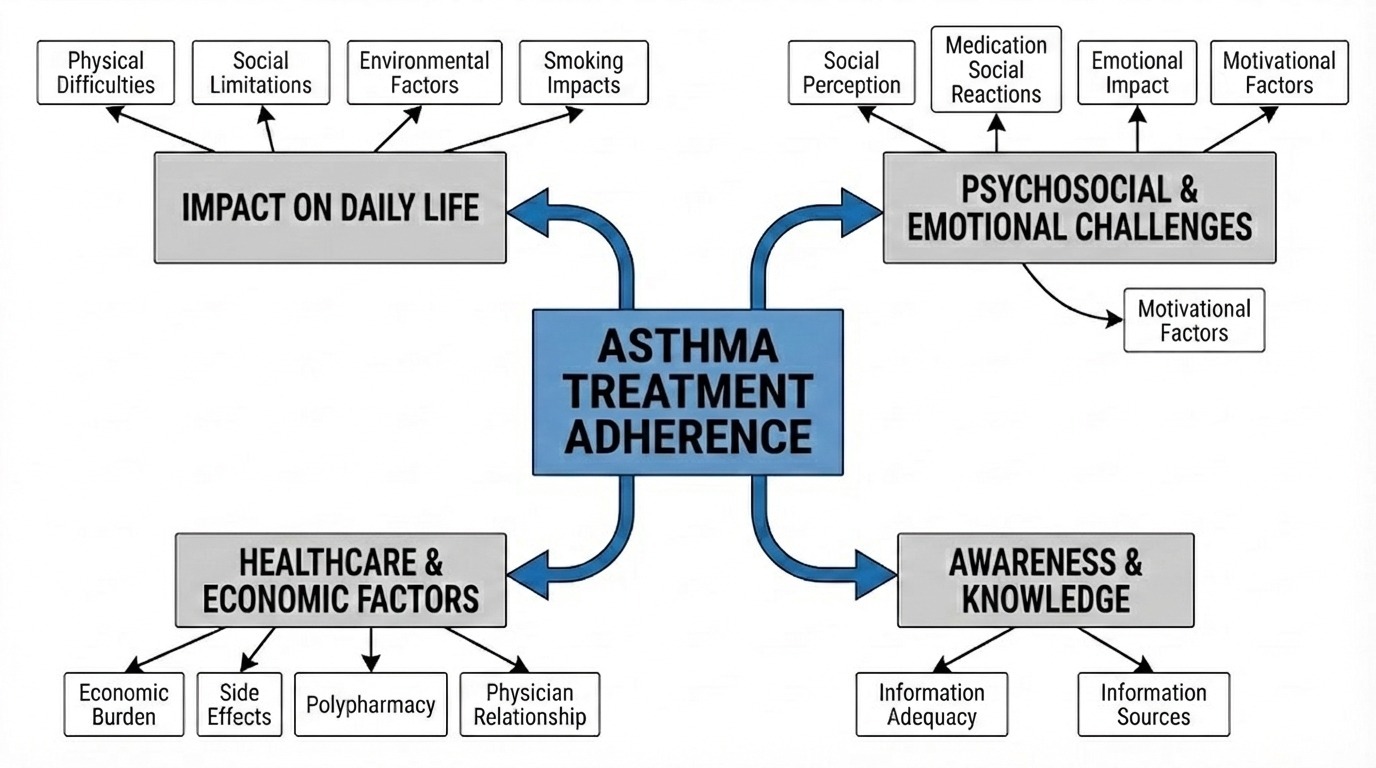
The analysis yielded four overarching themes: the impact of asthma on daily life, asthma treatment–related factors, awareness about asthma, and social perceptions, including social reactions and psychological–emotional dimensions (Table 2). The impact of asthma on patients’ daily lives was mainly physical difficulties and social limitations. Daily lives were harder due to some environmental factors, including smoking. Within these themes, treatment adherence emerged as a central component of effective asthma management. Participants described multiple barriers to treatment adherence, including medication-related side effects, economic factors, the burden of taking multiple medications, limited disease-related awareness, psychological distress and social reactions. In contrast, participants who reported stronger social support and higher levels of asthma-related awareness tended to demonstrate better treatment adherence and a higher perceived quality of life. The thematic framework regarding our participants’ adherence to asthma treatment is summarized in Figure 1.
To provide context while maintaining anonymity, each quotation is followed by a parenthetical code indicating the participant’s ID number, gender, age, and disease duration in years (e.g., P7, F, 56, D: 25).
Theme A. Impact of asthma on daily life
Asthma significantly limits daily activities and functional capacity due to symptoms such as shortness of breath, fatigue, and reduced tolerance to physical exertion, which are further aggravated by environmental triggers like dust, smoke, and allergens.
Subtheme A1: Physical difficulties
While a small number of participants reported minimal physical impact, most described multiple asthma-related physical problems, including shortness of breath, sleep disturbances, reduced exercise tolerance, coughing, and palpitations.
“It doesn’t kill you, but it makes you suffer. When I use the medications, it gets better. As soon as I stop, it comes back. It significantly lowers my quality of life.”(P7,F,56,D:25)
“I experience difficulty walking, especially when going uphill. Sometimes, because my asthma is allergic, if there is dust in the environment or the air is not well-ventilated at night, it can take me several hours to fall asleep.”(P1,F,40,D:1.5)
Subtheme A2: Social limitations
A small number of participants reported that asthma did not impose any social limitations on their lives. However, most participants stated that they were unable to enter crowded or public environments (due to allergens, dust, and similar triggers) and therefore felt socially restricted and left behind in social life. Among those who experienced social limitations, some participants reported difficulties in performing their professions (musician, cleaning staff member, and teacher).
“I cannot say that it has a major impact on my daily life at the moment. However, during certain sports activities or under specific weather conditions, I still feel its effects, although only rarely.”(P5,M,25,D:23)
Subtheme A3: Environmental factors
The majority of participants reported that their asthma symptoms were exacerbated by environmental factors such as allergens, dust, perfumes, and temperature changes, which, in turn, led to noticeable difficulties performing daily activities.
“Cigarette smoke affects me very badly. Even though it is prohibited, I have difficulty breathing in places where people smoke.” (P9,F,28,D:24)
“I experience difficulties when working in dusty environments. For instance, entering crowded places where perfume is present significantly affects me.” (P2,M,51,D:9)
Subtheme A4: Smoking and asthma
Cigarette smoke and air pollutants are well-established triggers of asthma exacerbations. Participants consistently reported that cigarette smoke provoked shortness of breath and asthma attacks, particularly in enclosed spaces or where smoking bans were not respected. Although many indicated difficulty in warning smokers, some participants also reported being smokers themselves.
“Cigarette smoke triggers my shortness of breath, and I am forced to go outside.”(P9,F,28,D:24)
“When I was younger, it felt very difficult to ask someone who was smoking to put out their cigarette, even in an enclosed space.”(P11,M,24,D:17)
Theme B: Asthma treatment
Despite the widespread use of both inhaled and oral medications, many participants demonstrated limited awareness of their prescribed treatments, while most reported good treatment adherence; however, the burden of taking multiple medications reduced motivation and treatment adherence in a small number of participants.
Regular medication use and accurate patient awareness regarding proper medication use are fundamental to effective asthma management.
Participants in our study described their symptoms and treatment adherence behaviours in highly individualized ways. Most participants reported not experiencing significant difficulty using multiple medications or adhering to continuous treatment.
Some participants reported experiencing financial difficulties in maintaining regular adherence to treatment due to the high cost of asthma medications. Some participants preferred not to use some medications due to side effects, whereas others continued to use their medications while tolerating the side effects.
Subtheme B1: Types of medications used
Approximately half of the participants were unable to name or recall the medications they were using. Participants reported using two primary forms of treatment: inhaled medications (commonly referred to as “sprays”) and oral tablets.
“I don’t really remember the names. I also use a type of breakable capsule. I had been using it until about a month ago.” (P1,F,40,D:1.5)
“I use V….. Especially during some periods, my heart suddenly starts to feel very tight and begins to race for no apparent reason.” (P6,M,19,D:14)
Subtheme B2: Treatment adherence
Most participants reported not experiencing significant difficulty using multiple medications or adhering to continuous treatment. However, a minority of participants expressed discomfort with taking several medications on a regular basis, noting that this negatively influenced their motivation and adherence to treatment. Our findings revealed that treatment adherence fluctuated over time. Participants described periods of increased treatment adherence, often linked to symptom exacerbations, followed by phases of neglect when symptoms were perceived as controlled.
"I am not someone who is inclined to use medications, and I find it difficult. Having many different medications, or an increase in the number of drugs, inevitably makes it even harder. ‘’(P1,F,40,D:1.5)
“I do not think it causes a major problem. When I use it regularly, it responds to the treatment, and using it properly makes my daily life more comfortable. Therefore, it is not a problem for me, and taking multiple medications does not affect me.” (P3,F,45,D:20)
“I am not a very adherent patient, to be honest. When my symptoms improve even a little, I sometimes stop taking my medications, and I cannot say that I use them regularly.” (P7,F,56,D:25)
Subtheme B3: Economic factors
Some of the participants reported experiencing financial difficulties in maintaining regular adherence to treatment due to the high cost of asthma medications.
“After being diagnosed with this disease, most of the medications and respiratory devices I used, including nebulizers and medicated inhalation devices, were priced in euros, which made them financially burdensome.” (P5,M,25,D:23)
Subtheme B4: Side effects
One participant reported that they tried to tolerate the side effects because they were short-term and there were alternative solutions available. Another participant stated that they preferred not to use the medication frequently due to experiencing side effects.
“The steroid inhaler causes white patches on my tongue. Because I feel that V….. provides sufficient relief, I generally choose not to use the steroid inhaler.” (P11,M,24,D:17)
“Side effects are, of course, very important to me. When I experience side effects from a medication, I become even more anxious and start to consider stopping it. However, I have not experienced such side effects with the medications I use for asthma. Occasionally, I had hand tremors after using the nebulizer. At times, I also experienced palpitations. But because there was no alternative solution, and since the palpitations and hand tremors were short-lasting, I continued using the medication.” (P9,F,28,D:24)
Subtheme B5: Physicians and health care services
One participant stated that the health care services they currently receive are better than in the past and that this improvement has positively affected their adherence to treatment. In contrast, another participant reported that their medical follow-up has decreased over time and that this reduction has led to an increase in the problems they experience. The remaining participants generally expressed neutral views regarding their physicians and health care services.
“In the early period, my problems were much greater because I could not reach the right doctor. Now, my doctor and my treatment are having a very positive effect on me.” (P3,F,45,D:20)
“In the past, this was not really an issue, but nowadays we experience more difficulties related to doctors. Follow-up has become more problematic, as there are always disruptions due to the process and heavy workload. I used to have a specific doctor. We would always go to that doctor at the same hospital for my follow-up.” (P6,M,19,D:14)
Subtheme B6: Polypharmacy
Some participants reported that they used many medications in daily life and therefore eventually became tired of taking them, and one participant discontinued her medications because of taking too many drugs in one day.
“I use many medications, including antihypertensive, cardiac, and allergy medications. Because of the large number of drugs, I eventually become tired and discontinue them. I also tend to stop my asthma medications, particularly when my symptoms improve.”(P7,F,56,D:25)
Theme C: Awareness about asthma
Adequate disease-related awareness and understanding are essential for patients with asthma, particularly with regard to recognizing and appropriately managing exacerbations. However, many participants demonstrated only superficial awareness of their condition and lacked a comprehensive understanding of asthma.
Subtheme C1: Adequacy of information
The majority of participants stated that the information they had received was sufficient, while the remaining participants reported that it was insufficient.
"As I mentioned, I had difficulties in the early period. However, in recent years, having more knowledge and the influence of my doctor, I no longer have these problems. "(P3,F,45,D:20)
“I’m not sure. Sometimes we feel stuck. For example, can these things improve with breathing exercises? Or can changes in living conditions affect some of the factors? Honestly, I think about these from time to time.” (P1,F,40,D:1.5)
Subtheme C2: Individual sources of information
Participants generally described their sources of information as physicians, internet-based research, and family experiences.
"I have done a lot of research since the beginning. Because I realized that this greatly affects my life, I searched extensively on the internet. "(P3,F,45D:20)
“Over the years, I learned from doctors like you.” (P7,F,56,D:25)
Theme D: Social perception, social reactions, and psychological and emotional factors
Asthma affects patients not only physically but also psychologically. Social perceptions of asthma may influence patients’ psychological well-being and treatment processes, as feelings of exclusion related to coughing attacks or medication use can negatively impact motivation and treatment adherence. Some participants reported that they sometimes sensed uncomfortable looks from those around them.
Subtheme D1: Society’s perception of asthma
Most participants reported an absence of negative social reactions, with several indicating that others were overly concerned about their condition. At the same time, one participant expressed discomfort with others making decisions on their behalf due to their illness.
“My friends were more careful around me, especially about avoiding dust. Because when there is a lot of movement, dust rises. In general, there was awareness in my social environment.” (P6,M,19,D:14)
“Because I cannot go to houses with cats. Sometimes my friends say things like, ‘Oh, she won’t come anyway.’ That makes me feel sad at times. Apart from that, when there are sports activities (such as walking, running, gymnastics, or fitness), my friends say, ‘No, she won’t come,’ but they still invite me. If they didn’t invite me at all, I would feel excluded.” (P9,F,28,D:24)
Subtheme D2: Asthma medications and social reactions
A minority of the participants stated that people around them reminded them to take their medications. Some of the remaining participants reported that they received no particular reactions. The rest, however, expressed that they sometimes sensed different or uncomfortable looks from people around them.
“I use a breakable capsule inhaler. When I inhale it, it makes a very loud noise. People look at me as if something is wrong, and that inevitably affects me.” (P1,F,40,D:1.5)
“People around me, especially my father and other family members, get very involved. They ask me whether I have taken my medication, whether I have used my inhaler, or done the steam treatment. However, this affects me positively. They even remind me to take my col…. as well. It has a positive effect because I sometimes forget.” (P9,F,28,D:24)
Subtheme D3: Emotional Impact of the Disease
The majority of participants stated that although their disease was distressing, they had become accustomed to it, accepted it, and were coping well. Some participants, however, expressed that due to persistent shortness of breath, they sometimes felt frustrated and saddened by having a disease that restricted their lives.
“In this respect, it’s quite bad; you inevitably find yourself comparing yourself with others. I mean, the other person is breathing comfortably, and it’s really a very bad feeling.” (P6,M,19,D:14)
“Of course, there were times when I felt I needed medication. However, it is ultimately a treatable condition, and it could have been worse.” (P10,M,33,D:19)
“There were even times when I had to leave the classroom because I was coughing so much in front of the students. Of course, those moments affected me negatively.” (P3,F,45,D:20)
Subtheme D4: Motivational factors
Some of the participants reported that being able to see the effectiveness of their treatment and feeling capable of managing their disease helped them adhere to treatment and feel psychologically stronger.
“I have a child, and I want to stay healthy for them.” (P8,F,38,D:4)
“Being able to sing and exercise comfortably, especially at the beginning, motivated me to adhere to asthma treatment, as it enabled me to do these things.” (P10,M,33,D:19)
Discussion
In our study, asthma was experienced not only as a medical condition but also as a multidimensional burden affecting patients’ daily lives. Because asthma requires long-term and often lifelong treatment, treatment adherence represents a complex and dynamic process rather than a static behavior.8
Our study revealed that the impact of asthma on patients’ daily lives was mainly characterized by physical difficulties and social limitations. Asthma significantly restricted the daily activities and functional capacity of our participants because of symptoms such as shortness of breath and fatigue, which the majority of participants reported were further aggravated by environmental triggers, particularly cigarette smoke, dust, allergens, perfumes, and temperature changes. Consistent with our findings, a time-series study conducted in Korea reported that outdoor environmental factors, including aeroallergens, diurnal temperature range, and ambient air pollutants, contribute to short-term increases in asthma exacerbations.14 Although a small number of our participants reported no social limitations, most indicated that they avoided crowded or public environments and felt socially restricted, with some also reporting difficulties in performing their professional roles. These findings are in line with the literature, in which asthma has been reported to impose a substantial burden on patients’ daily activities, work productivity, and quality of life, with physical and functional limitations that are frequently exacerbated by environmental triggers such as smoke, dust, and allergens.1,11
Among environmental triggers, in our study participants described cigarette smoke exposure as a major barrier to asthma control, restricting physical functioning and social participation. Participants consistently reported that cigarette smoke provoked shortness of breath and asthma attacks, particularly in enclosed spaces or where smoking bans were not respected. Although many indicated difficulty in warning smokers, some participants also reported being smokers themselves. Very similar to our finding, in a study carried out in Türkiye, Aytemur and colleagues reported that both active and passive smoking increased disease severity and the frequency of asthma exacerbations.15 Furthermore, Aytemur documented that continued smoking was associated with lower adherence to pharmacological treatment, while difficulty quitting contributed to symptom worsening and poorer well-being.15 Their findings and our findings support the integration of smoking cessation interventions and strict environmental control measures into comprehensive asthma care. Although Türkiye has made considerable progress in tobacco control through the WHO FCTC (World Health Organization Framework Convention on Tobacco Control) and MPOWER framework, challenges in enforcement persist.14
Many participants demonstrated only superficial awareness of their condition and lacked a comprehensive understanding of asthma. They described their symptoms and treatment adherence behaviors in highly individualized ways, shaped by personal experiences, illness interpretations, and coping strategies. Despite the widespread use of both inhaled and oral medications, many participants demonstrated limited awareness of their prescribed treatments. Asthma treatment adherence extends beyond issues of medication access or prescription and is deeply influenced by patients’ cognitive appraisals of their illness, their understanding of therapy, and their emotional engagement with long-term treatment. Inadequate or fragmented information about the disease and long-term treatment goals may lead to inappropriate medication use and reduced treatment adherence. Studies have shown that higher levels of asthma-related knowledge and structured patient education provided by healthcare professionals are associated with better self-management skills, improved symptom control, and higher adherence to prescribed therapy.16,17
Our findings revealed that treatment adherence fluctuated over time. Participants described periods of increased treatment adherence, often linked to symptom exacerbations, followed by phases of neglect when symptoms were perceived as controlled. Kepil Özdemir and Özgüçlü further demonstrated that a considerable proportion of asthma patients do not adhere adequately to prescribed regimens over the course of their illness.18 Wanat et al. reported that patients’ approaches to asthma treatment may change over time and are influenced by social and contextual factors.19 This dynamic pattern highlights the importance of continuous follow-up, sustained therapeutic relationships, and ongoing motivational support rather than episodic care models.
Some participants expressed discomfort with taking several medications on a regular basis and noted that this negatively influenced their motivation and adherence to treatment, with one participant reporting that they eventually became tired of their daily medication load and discontinued treatment. In a study conducted in the United States, researchers found that approximately one in three adults with asthma experienced polypharmacy, and they were at an increased risk of experiencing asthma attacks.20 Similar to our findings, a research from New Zealand highlights that participants experienced confusion concerning their treatment protocols and lacked clarity on proper medication usage.21 Notably, a significant number of participants expressed a preference for minimizing their pharmacological intake, especially concerning preventive inhalers.21
Some participants preferred not to use certain medications due to side effects, whereas others continued to use their medications while tolerating the side effects. In a study conducted in Türkiye, researchers reported that fear of side effects was among the primary reasons for irregular medication use in asthma patients.18 These findings indicate that patient education should extend beyond the provision of biomedical information to address patients’ beliefs, expectations, and emotional responses to long-term therapy.
Some participants reported experiencing financial difficulties in maintaining regular adherence to treatment due to the high cost of asthma medications. In existing literature, among adults with asthma, economic hardship at the patient level represents a major barrier to treatment adherence, as out-of-pocket medication costs have been shown to lead patients to delay prescription refills, reduce doses, or skip medications in order to save money, resulting in cost-related non-adherence.22 In addition to economic barriers, in patients with asthma, treatment complexity and the use of multiple concomitant therapies have been identified as important therapy-related barriers to treatment adherence, as more complex regimens increase treatment burden and are associated with poorer medication-taking behavior.23
In our study, the participants were not criticizing their physicians and health services in general; however, it is reported that the quality of clinician–patient interactions, adequacy of counseling, and continuity of care constitute fundamental determinants of sustained treatment adherence.10
In our study, encouragement and assistance from family members and friends facilitated treatment adherence, whereas limited understanding within the social environment undermined treatment routines. While a minority of participants stated that the people around them tried to help and occasionally reminded them to take their medications, others described discomfort at having decisions made on their behalf because of their illness, as well as at the judgmental or uncomfortable stares they perceived from others, particularly during coughing attacks or when using their inhalers. Feelings of exclusion related to coughing attacks or medication use can have a negative impact on motivation and treatment adherence. Social context can emerge as a significant determinant of adherence.16 Lycett et al. demonstrated that social support directly influences treatment adherence among asthma patients.16 Although social support is usually regarded as beneficial, Greenfield et al. reported that higher levels of social support were associated with poorer asthma control and lower asthma-related quality of life in adults, particularly among patients with lower self-efficacy.7 In addition to social and contextual influences, Haughney reported a substantial emotional burden associated with asthma, manifested by psychological distress, persistent worry, and diminished self-esteem resulting from the unpredictable nature of symptoms and the restrictions imposed on daily activities.24
Emphasizing the preventive value of regular medication use, providing strategies to manage side effects, and facilitating access to treatment—particularly for patients with limited financial resources—appear essential for improving treatment adherence.
Furthermore, our findings highlight the importance of incorporating family- and community-based support mechanisms into asthma management strategies. Practical interventions, such as community education programs or patient-centered care models, can be needed.
Study Limitations
Given the qualitative design of this study, the findings should be interpreted with caution and cannot be directly generalized to all individuals with asthma. According to the nature of qualitative studies, transferability can be partially used and findings most of the time represent only the sample population; furthermore, in qualitative research, researchers aim to generalize the results obtained through data analysis to events with similar characteristics. In this study, transferability was partially achieved by interpreting the findings in light of research with similar characteristics. This is presented as one of the limitations of our study. Asthma severity is not a static feature and may change over months or years.
Asthma severity can be assessed when the patient has been on regular controller treatment for several months. Therefore, the severity of an asthma patient being either severe or moderate was not presented in Table 1 in our findings. This can also be considered a limitation.
Participants were recruited from adult patients attending a pulmonology outpatient clinic and were in a stable clinical condition at the time of data collection, with no acute exacerbations. Patients with poorly controlled or more severe asthma, frequent exacerbations, or substantial limitations in daily functioning were not sufficiently represented. This may have reduced the transferability of the results and may have led to an underestimation of the psychosocial difficulties and treatment adherence barriers experienced by patients with more severe disease. Furthermore, the study was conducted in a single center and included individuals who reported no major difficulties in accessing health care services, which may further limit the broader applicability of the findings.
Conclusion
The results of this study indicate that patients with asthma experience multiple challenges affecting treatment adherence, including inadequate disease-related knowledge, fear of medication side effects, polypharmacy, psychological burden, social influences, and exposure to environmental factors particularly cigarette smoke. These factors negatively impact disease control, daily functioning, and overall quality of life. Difficulties related to social perceptions, emotional responses, and environmental triggers further highlight that asthma management extends beyond pharmacological treatment alone.
The findings emphasize the need for structured, patient-centered interventions. Practical approaches such as continuous physician follow-up, comprehensive asthma education programs, psychosocial support services, and smoking cessation initiatives should be developed and systematically implemented to enhance treatment adherence and long-term disease control. Multidisciplinary care models integrating medical, educational, and psychosocial components may play a key role in improving patients’ self-management skills and health outcomes.
Future research is recommended to include population-based, large-scale quantitative studies to examine the generalizability of these findings and to assess the relative impact of identified factors on treatment adherence. Longitudinal studies investigating changes in treatment adherence behaviors over time and the effectiveness of targeted interventions are also warranted. In addition, the development of validated quantitative scales to measure asthma treatment adherence, asthma-related beliefs, perceived social support, and psychological barriers to treatment adherence may contribute to a more comprehensive understanding of patients’ lived experiences and inform evidence-based asthma management policies.
Statements and Declarations
Acknowledgments
The authors would like to express their sincere gratitude to all the participants who volunteered their time and shared their personal experiences for this study. Their openness and invaluable contributions were essential to the completion of this research.
Funding
This study did not receive any specific grant from funding agencies in the public, commercial, or not-for-profit sectors.
Competing interests
The authors have completed the ICMJE uniform disclosure form and declare no conflict of interest.
Ethics
The study was approved by the ethics committee of the University Faculty of Medicine and complied with the principles of the Declaration of Helsinki. The participants were free to leave the study at any time and were informed of the same before the start of the study.
AI Statement
The authors confirm that no generative AI or AI-assisted technology was used to generate content.