
Introduction
Cystic fibrosis (CF) patients usually produce a lot of thick mucus in the airways that is not removed by the conventional way, i.e., the normal expectoration process, which causes mucus retention and results in infections, decreased ventilation, and ultimately affects lung function.1 Physical exercise to clear the mucus from the airways is one of the main treatment modalities in patients with CF.2 Airway mucus-clearing techniques help with proper gas exchange, improve lung function, and decrease the chances of infection.3 The gold standard treatment for many years was postural drainage.4 In 1968, Thompson and Thompson invented the forced expiratory technique for mucus clearance in asthmatic patients,5 which was later proposed by Pryor et al. for the treatment of CF.6 In recent years, airway clearance techniques have been widely used for CF patients and include active breathing exercises, treadmill exercise, postural drainage, conventional physiotherapy, and positive expiratory pressure with a mask.7,8 However, for short-term relief, self-physiotherapy (with percussion) is clinically more beneficial for CF patients.9
The treatment options for CF are very limited. There is no conclusive therapeutic intervention from the clinicians. Previous reviews have compared the active cycle of breathing technique (ACBT) with conventional physiotherapy or with oscillating devices and were completed five years ago.10 Modern airway oscillating devices, such as Flutter, Acapella, and high-frequency chest compression devices (The Vest and Hayek oscillator), have been approved recently, but these devices require another person to operate. In contrast, breathing techniques can be performed without assistance to manage mucus clearance problems from the airways, even at home. The participants, however, preferred self-airway clearance techniques over these assisted therapies, like Flutter and Acapella.11
In the ACBT technique, breathing control is used to give the patient rest before and after the active parts of the ACBT exercise, like forced expiration and thoracic expansion maneuvers. During this period, the patient is asked to relax the upper respiratory muscles and use the lower muscles, like the diaphragm, to decrease bronchoconstriction. This step is followed by active components of the technique. The thoracic expansion exercise is comprised of active inspiration and a three-second hold at end inspiration, followed by passive expiration. This step allows air to expand in the alveoli, mobilize secretions, and decrease airflow resistance.12 The forced expiration technique contains forceful expiration (huff) with breathing control. This causes the mobilization of thick secretions from smaller parts to larger airways, and then a cough helps in clearing the mucus. The force of expiration and duration of huff can be modified to maximize the secretion outflow.13
In addition, much of the available literature predates the widespread introduction of cystic fibrosis transmembrane conductance regulator (CFTR) modulator therapies, which have substantially altered disease progression and respiratory management in many individuals with CF. As a result, the contemporary applicability of earlier airway clearance studies may be limited.
Until now, no reviews have been undertaken to compare these self-managing breathing exercises and techniques to establish the most effective technique for mucus clearance in CF patients. To date, only limited reviews have compared ACBT with other assisted mucus clearance techniques,14 and the most recent review was conducted years ago. Considering this scant literature, it is unclear which self-managing exercise therapy is most beneficial and effective for improving lung function, quality of life, and mucociliary clearance in CF patients. This systematic review will compare the active cycle breathing technique with other self-administered techniques to determine whether ACBT is more effective than other techniques for people with CF, and the findings could be used to inform clinicians via the NICE guidelines.
Methods
This systematic review was reported according to the Preferred Reporting Items for Systematic Reviews and Meta-Analyses (PRISMA) guidelines.15 The protocol for this review is registered with the PROSPERO International Prospective Register of Systematic Reviews (CRD420251172383) (see Appendix A).
Eligibility Criteria
Only patients with CF were eligible for inclusion in the review, with no restrictions on age; both sexes were included. The particular considerations for eligibility rules were studies that have been published in English, the design for included studies was randomized controlled trials, and the studies were included in which ACBT was compared with at least one other breathing technique, reported at least one relevant outcome measure, including pulmonary function, sputum clearance, oxygen saturation, or quality of life. The exclusion criteria were all trials on cell structure, case reports, animals, study duplicates across databases, reviews, unpublished results, editorials, posters, irrelevant outcomes, and studies not in English. Although one included study examined ACBT delivered in combination with non-invasive ventilation (NIV), it was retained because the airway clearance intervention remained centered on ACBT rather than NIV as a standalone airway clearance modality. This was acknowledged as a source of clinical heterogeneity.
The results were formulated as the intervention of active cycle breathing technique compared with controls such as conventional physiotherapy, other home exercises, autogenic drainage (AD), and postural drainage (PD) techniques. The effects were assessed after initiation of therapy. The minimum follow-up was 2 days from the start of treatment.
The exploration for pertinent studies covered the period to date. The databases we searched were the Cochrane Library (1980–Present), MEDLINE/EBSCO (1980–Present), and PubMed (1977–Present).
The words and their synonyms utilized for looking through the studies in the various databases were Cochrane library "mucus clearance techniques in Title Abstract Keyword OR active cycle breathing technique in Title Abstract Keyword AND cystic fibrosis in Title Abstract Keyword. In PubMed “((airway clearance technique) OR (active cycle breathing technique)) AND (cystic fibrosis)”. In MEDLINE “self-administered techniques” OR (breathing exercises or breathing techniques or diaphragmatic breathing) AND cystic fibrosis. The search material was selected in an integrated manner to cover a wide range of studies. No date limitations were applied to the databases. No grey studies were audited for this systematic review. No individual authors or organizations were contacted for study or result identification.
In the screening process, one reviewer reviewed the titles and abstracts, and a second reviewer verified their selections. No disagreements arose that required input from a third reviewer. No investigator was contacted for confirmation of the study. A similar approach was applied to the full-text reviewing process. All articles considered potentially relevant were obtained and evaluated by two reviewers (a primary reviewer and a verifier). No date restriction was applied beyond the planned cut-off. All identified studies were downloaded into EndNote bibliographic software and, where necessary, duplicates were eradicated. Information was retrieved only from free databases (Cochrane, PubMed, and MEDLINE).
Data Outcomes
Studies were included in this review if at least one technique was compared with ACBT, and if at least one outcome was measured according to current systematic review criteria. For this systematic review, the research was completed to examine the effectiveness of one technique on the specific primary outcomes: lung function (forced expiratory volume, FEV1 or forced vital capacity, FVC), sputum weight, oxygen concentration, and quality of life.
Study Risk of Bias Assessment
The risk of bias assessment was completed using the Cochrane risk of bias tool (RoB 1) for each study included. The Cochrane risk of bias tool has six components: Selection bias, performance bias, detection bias, attrition bias, reporting bias, and other non-specific biases. One reviewer completed the assessment, and the second reviewer independently verified the ratings. Review Manager (RevMan 5.4.1) was used to generate the risk-of-bias figures.
Data Synthesis
The outcomes, such as lung function tests (FEV1 or FVC), were measured by mean differences of % predicted. Sputum weight (g) was assessed using the mean range, oxygen saturation (mean %) was assessed, and quality of life was assessed using the Leicester Cough Questionnaire (LCQ) score. All of them are presented in Table 1. The quality of studies was assessed using the Cochrane Library to assess the risk of bias for every included study. The data were summarized in an Excel spreadsheet for synthesis of results. The extracted data were converted into table form in a Word document. The data were also expressed in charts and graphs. Both reviewers assessed the reporting of missing information/ biases from the included studies. The method sections of each study were reviewed and compared thoroughly to assess and ensure each outcome reported by the authors.
Owing to substantial heterogeneity in study populations, intervention protocols, comparator techniques, follow-up durations, and reported outcome measures, quantitative meta-analysis was not considered appropriate. Findings were therefore synthesized narratively.
Results
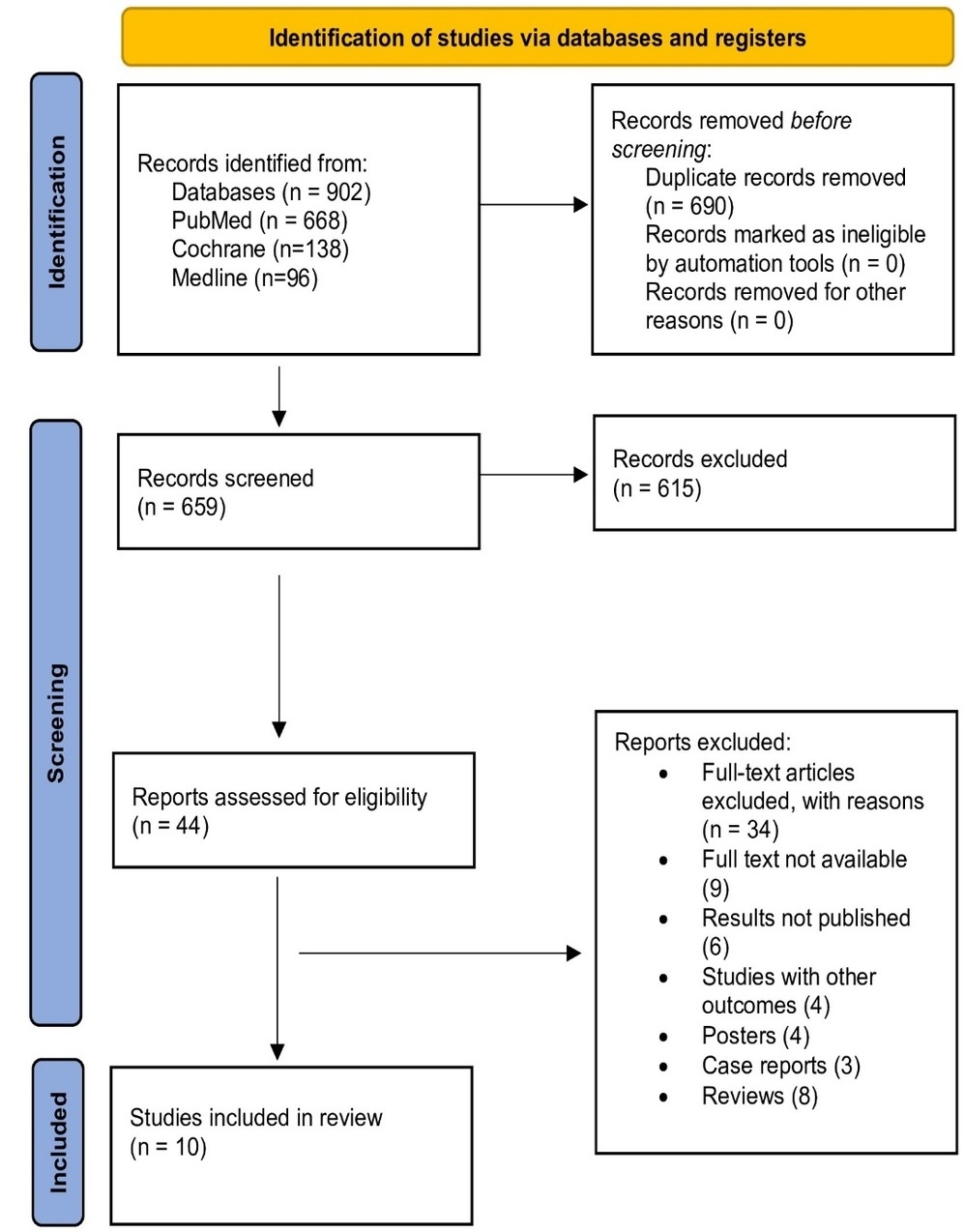
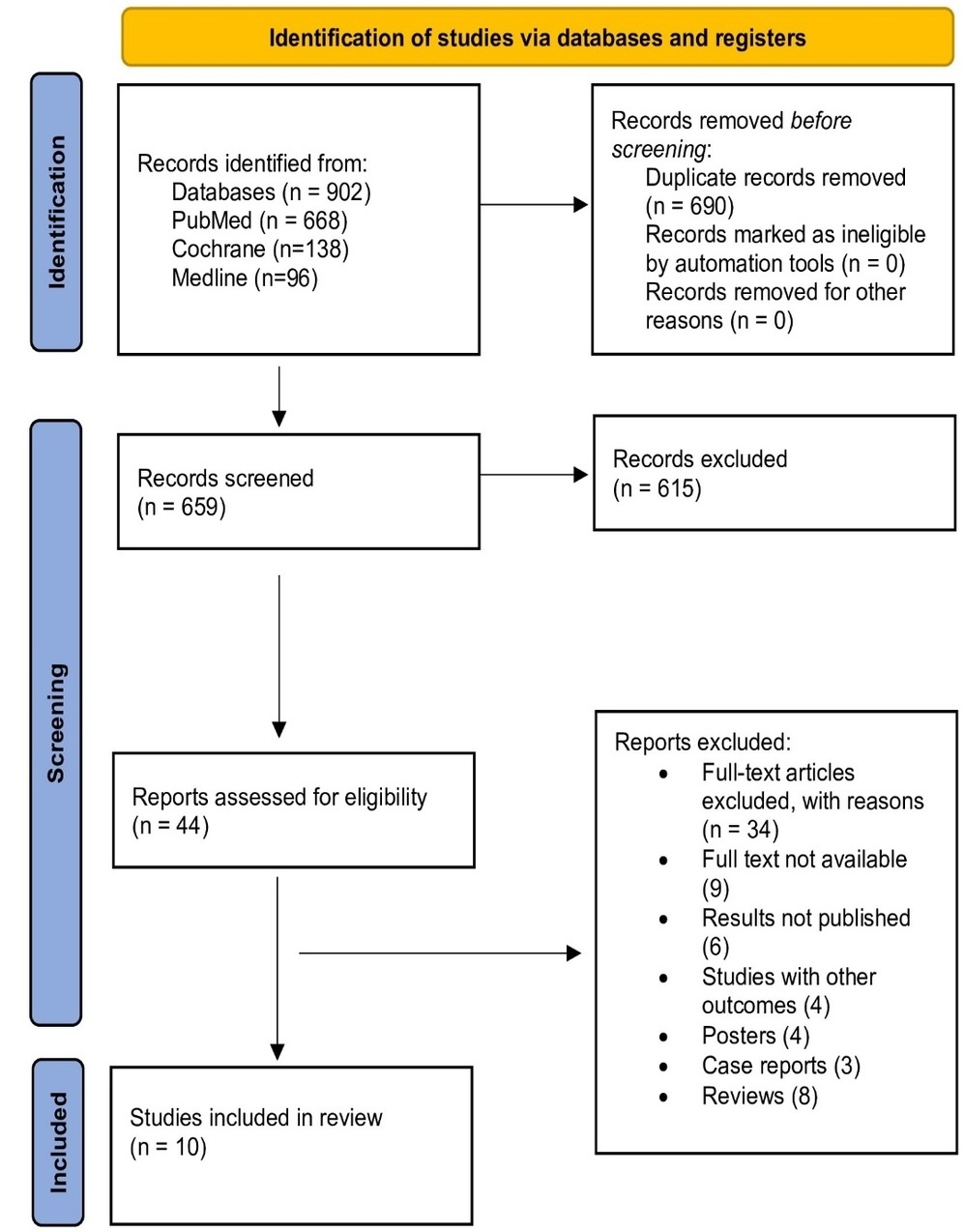
A total of 902 records were identified through searches of PubMed, MEDLINE, and the Cochrane Library. After removal of 243 duplicates, 659 records remained for title and abstract screening. Following eligibility assessment, 44 full-text articles were reviewed. Thirty-four studies were excluded because of irrelevant outcomes, non-randomized design, unavailable full text, non-English language, or publication type restrictions. Ten randomized controlled trials met the inclusion criteria and were included in the qualitative synthesis (Figure 1).
Characteristics of Included Studies
Ten randomized controlled trials were included (Appendix B). Four originated in the UK,16–19 two in Turkey,20,21 and one each from Australia, Greece, Spain, and a multicenter collaboration.22–25 Three studies investigated pediatric participants (mean ages: 9.1, 12.4, and 15.4 years), while the remaining included adults aged 21.9–66.8 years. All trials enrolled CF patients; some studies additionally included participants with bronchiectasis-associated symptoms or respiratory infection, contributing to clinical heterogeneity. Of all ten, three studies16,21,25 also included CF with bronchiectasis, and one involved patients with chest infections.25 Sample sizes ranged from 14 to 75 participants.
All studies were randomized controlled trials. Six compared the ACBT with conventional physiotherapy such as AD or PD. Specifically, AD was used in Miller et al., Pryor et al., and Üzmezoğlu et al.,18,21,22 while PD served as the comparator in AbdelHalim et al., Chatham et al., and Hristara-Papadopoulou & Tsanakas.16,17,24 The remaining four studies compared ACBT with assisted or modified techniques, including physiotherapist-assisted ACBT (Williams et al.),23 expiration with open glottis in lateral posture (Muñoz et al.),25 ACBT with NIV (Stanford et al.),19 and ACBT combined with postural exercises (Güngör et al).20 Follow-up durations varied from 2 days to 1 year, with some assessing immediate effects within 15–30 minutes of therapy and others evaluating outcomes at 2 weeks, 1 month, 6 months, and 12 months. All studies assessed efficacy using pulmonary function tests, sputum weight, oxygen saturation, or quality-of-life outcomes (see Appendix B).
Risk of Bias
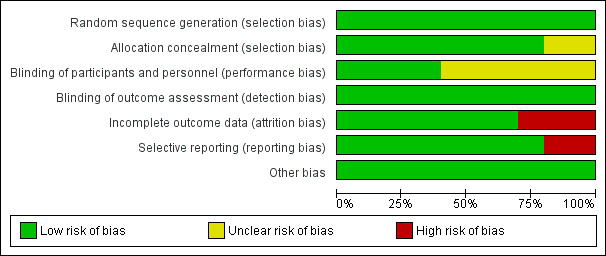
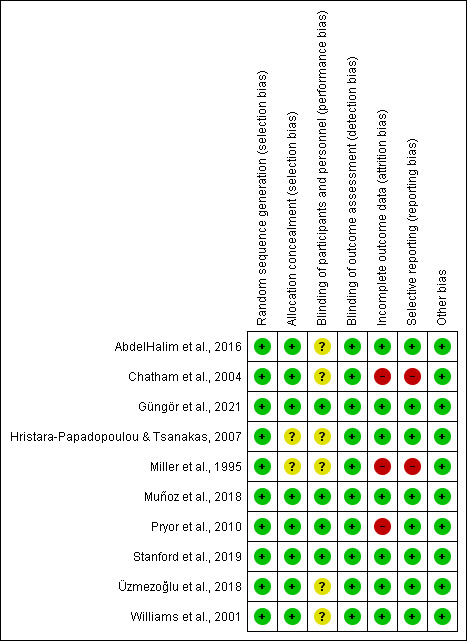
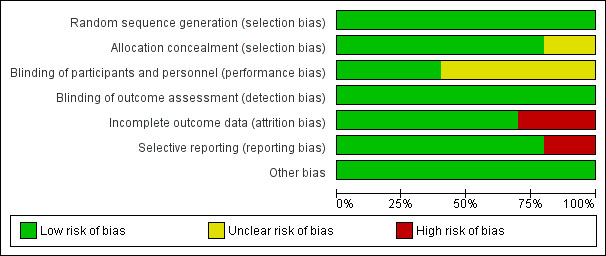
Risk of bias was evaluated using the Cochrane Risk of Bias Tool, in line with PRISMA 2020 and PROSPERO standards (Figure 2). Overall methodological quality was moderate. All included studies used randomized designs; however, two studies employed crossover methodologies, introducing potential carryover effects. Several studies lacked sufficient detail regarding blinding, allocation concealment, or management of missing data. Attrition bias was judged as high or unclear in multiple studies because of incomplete reporting. Reporting bias was also identified in studies that did not clearly specify pre-specified outcomes. The overall evidence base was further limited by small sample sizes, methodological heterogeneity, and the inclusion of older studies conducted prior to current CFTR modulator therapies.
_risk_of_bias_graph_of_included_studies_(b)__summary_of_risk_of_bias_of_a.png)
Pulmonary Function Tests (PFTs)
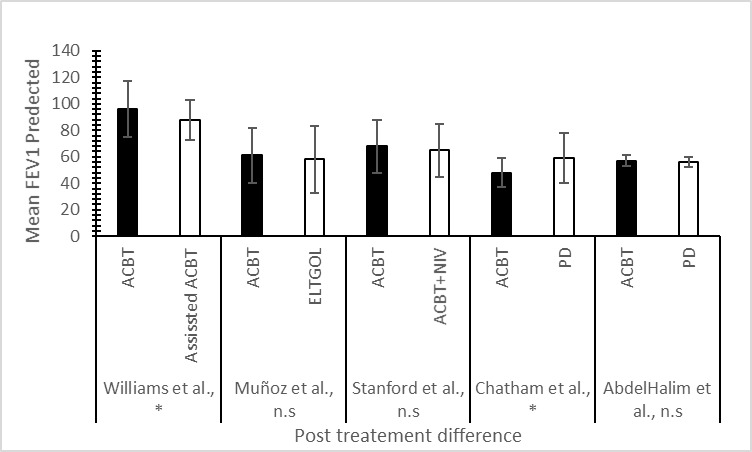
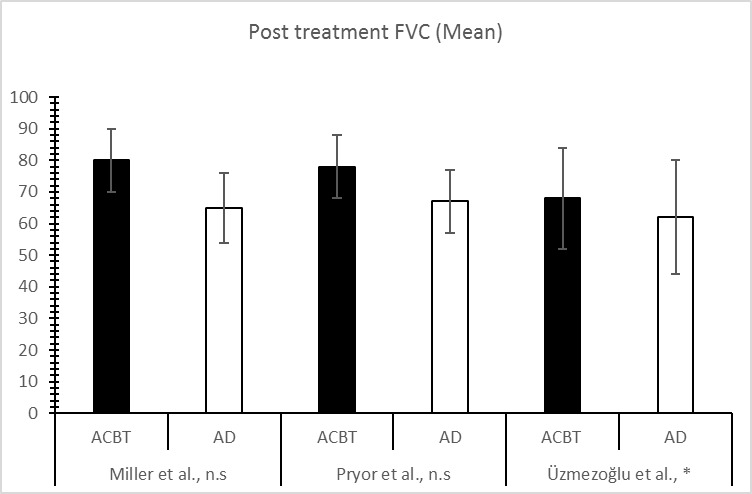
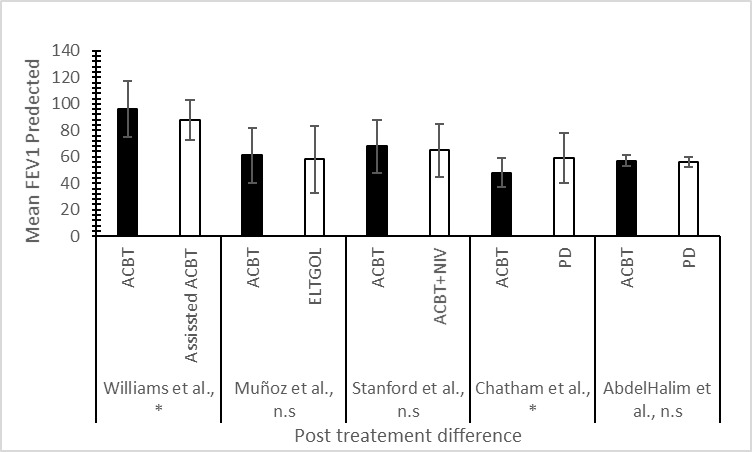
Nine studies assessed pulmonary function, primarily using FEV1 and FVC. Only Hristara-Papadopoulou & Tsanakas24 evaluated efficacy through sputum weight alone. Eight studies reported improvements in mean FEV1, while three18,21,22 also measured changes in mean FVC between intervention and control groups (Figure 3). However, statistically significant differences were inconsistent across studies. Short-term follow-up studies (6 hours to 4 days) demonstrated immediate gains in FEV1 and FVC, while longer follow-ups (up to 12 months) conducted by Pryor et al. and Muñoz et al.22,25 showed sustained but modest improvements. Similarly, studies comparing ACBT with postural drainage demonstrated mixed findings. Chatham et al.17 reported short-term improvement in FEV1 following repeated ACBT sessions, whereas AbdelHalim et al.16 found no statistically significant difference after two weeks of intervention. Studies evaluating assisted ACBT, expiration with open glottis in lateral posture (ELTGOL), or NIV-supported ACBT generally demonstrated pulmonary outcomes comparable to ACBT alone, with no clear evidence of long-term superiority. Overall, evidence suggested that ACBT may provide short-term improvements in pulmonary function; however, the clinical significance and long-term comparative effectiveness remain uncertain.
_after_therapy_in_included_studies._(a)_comparison_of_acbt_wi.png)
Sputum Weight
Seven studies measured sputum weight as an indicator of airway clearance. Two compared ACBT with AD, two with PD, one with ELTGOL, and one with NIV. Williams et al., Pryor et al., and Güngör et al.20,22,23 did not report sputum weight. Among seven studies, two of them compared the weight of sputum after ACBT therapy and AD therapy. Two studies compared sputum weight with PD, and one study compared sputum weight with ELTGOL and NIV with ACBT, respectively (Table 1). Of these, three studies16,21,25 included CF patients with bronchiectasis, and one study by Chatham et al.17 included infected CF patients. Despite these findings, sputum measurement methods varied considerably between studies, and the clinical interpretation of sputum weight outcomes remains limited because of potential contamination by saliva and variability in expectoration technique.
Oxygen Saturation
Four studies16,18,19,23 evaluated oxygen saturation. Most studies used pulse oximetry, while one study used indirect calorimetry. AbdelHalim et al.16 found significant improvement in mean oxygen saturation (80% vs. 69%; p < 0.043) with ACBT compared with PD, suggesting enhanced ventilation (Table 1). The other studies reported no significant differences between ACBT and comparison groups. Overall, evidence supporting improved oxygenation following ACBT remains limited and inconsistent.
Quality of Life
Six studies measured quality of life using the LCQ.26 Improvements were observed in physical, social, and psychological domains. AbdelHalim et al., Muñoz et al., and Üzmezoğlu et al.16,21,25 demonstrated greater improvements in older adults, while Güngör et al.20 found similar benefits in children (mean age 9.1 years). Pryor et al.,22 the largest multicenter study with 75 participants, showed the most notable enhancement in LCQ scores, confirming ACBT’s positive impact on symptom control and overall well-being in CF patients. However, the magnitude of benefit varied across studies, and long-term quality-of-life outcomes remain uncertain because of the limited size and heterogeneity of available trials.
Discussion
This systematic review evaluated the effectiveness of ACBT compared with other self-administered airway clearance techniques and exercises for managing mucus clearance in patients with CF. Outcomes included pulmonary function, sputum weight, oxygen saturation, and quality of life.
PFTs were assessed using spirometry in accordance with American Thoracic Society and European Respiratory Society standards,27 with results expressed as percentage predicted values.28 Three studies18,21,22 compared ACBT with AD. They reported higher mean FVC values for ACBT (80%, 78%, and 70%) than AD (65%, 67%, and 62%). Miller et al. and Pryor et al.18,22 found no significant differences (p = 0.54), though Üzmezoğlu et al.21 reported significant improvement (p = 0.002) following repeated short ACBT sessions over six hours. These findings suggest that combining breathing control, thoracic expansion, and forced expiratory techniques may aid secretion clearance and reduce airflow obstruction. However, improvements were generally small and statistical significance was inconsistent.
Two additional studies compared ACBT with PD. Chatham et al. and AbdelHalim et al.16,17 reported mean FEV1 in one second values of 48% and 57% for ACBT versus 59% and 56% for PD. While Chatham et al.17 observed significant improvement (p < 0.01) after 30-minute sessions over four days, AbdelHalim et al.16 found no significant difference after two weeks. Clinical benefits may occur without statistical significance, particularly in underpowered studies. Interpretation is limited by small, heterogeneous studies conducted before widespread CFTR modulator use, reducing applicability to contemporary CF care.
Williams et al., Muñoz et al., and Stanford et al.19,24,25 evaluated ACBT against physiotherapist-assisted ACBT, ELTGOL, and ACBT combined with NIV. Williams et al.23 reported a near-significant difference (p = 0.07) favouring self-administered ACBT during two-day sessions. In contrast, Muñoz et al.25 found no significant difference between ACBT and ELTGOL after 12 months, while Güngör et al.20 observed improved PFTs with postural and stretching exercises, though differences were not significant (p > 0.5). Overall, ACBT appeared effective in improving lung function in the short term compared with PD and AD, though long-term advantages over other techniques remain unclear. Contemporary CF management has changed substantially with the introduction of highly effective modulators, which improve mucus hydration, reduce pulmonary exacerbations, and alter disease progression. Consequently, the applicability of older airway clearance studies to modern CF populations may be reduced.
Sputum weight is an imperfect marker because it can be influenced by saliva contamination, patient effort, and expectoration technique. Nevertheless, Miller et al. and Üzmezoğlu et al.18,21 reported significantly greater sputum reduction with ACBT than AD, while Hristara-Papadopoulou & Tsanakas24 found superior sputum clearance with ACBT versus PD in children. Similar, non-significant trends were observed by Chatham et al. and AbdelHalim et al.16,17 Muñoz et al.25 also favoured ACBT over ELTGOL. Regarding oxygenation, AbdelHalim et al.16 found significant improvement after ACBT, whereas other studies18,19,23 reported no significant differences, suggesting variable short-term benefits.
Quality of life was assessed in six studies using the LCQ.26 Pryor et al. and Muñoz et al.22,25 reported significant improvements in physical symptoms and mental health after ACBT, exceeding the minimal clinically important difference.29 Pryor et al.22 provided strong evidence for sustained quality of life benefits over 12 months. Although Üzmezoğlu et al. and Güngör et al.20,21 found greater initial emotional benefits with postural exercises, ACBT offered superior long-term symptom relief and improved comfort in both pediatric and adult CF populations.
Limitations
The possible limitations of this systematic review will include several methodological and practical factors that may affect the strength and generalizability of the findings. First, only English-language studies were included, which may have introduced language bias. Second, the number of eligible studies was small, and many trials involved limited sample sizes and short follow-up durations, reducing statistical power and limiting conclusions regarding long-term effectiveness. Third, substantial heterogeneity existed across studies in terms of participant characteristics, intervention protocols, comparator techniques, and outcome measures, which prevented quantitative meta-analysis. Fourth, several included studies were conducted before the widespread introduction of CFTR modulator therapies. As modern CF management has evolved considerably, the relevance of older airway clearance studies to current clinical practice may be limited. Fifth, some studies included participants with bronchiectasis-associated symptoms or respiratory infection, which may reduce the generalizability of findings to the broader CF population. Finally, heterogeneity among study protocols, outcome measures, and follow-up durations limited data pooling and prevented meta-analysis.
Conclusion
In conclusion, ACBT may provide short-term improvements in pulmonary function, sputum clearance, and quality of life in individuals with CF, performing similarly to other non-device airway clearance techniques while offering advantages in patient independence and self-management. However, evidence is limited by small sample sizes, methodological heterogeneity, inconsistent outcome reporting, and the predominance of pre-CFTR modulator studies, making its long-term effectiveness and current clinical relevance uncertain. Further high-quality randomized controlled trials with standardized protocols, larger cohorts, and longer follow-up are needed to clarify ACBT’s role in modern CF care and non-CF bronchiectasis.
Conflict of interest
The authors declare no conflict of interest.
Authors Contributions
All authors participated equally in the preparation of the manuscript and approved its final version.
Ethical approval
This review did not require institutional ethics approval.
Funding
There is no funding or support received by any person, institute, organisation or from any other source.
AI Statement
The authors confirm that no generative AI or AI-assisted technology was used to generate the scientific content of this manuscript. AI-assisted tools were used only for language editing and improvement of clarity.